


The Brontës and Religion (hardback)
appeared from Cambridge University Press in 1999. The first full-length study of religion in the Brontë fiction, it shows how the Brontës’ familiarity with the contemporary debates on doctrinal, ethical, and ecclesiastical issues informs their novels. Divided into four parts, the book examines denominations, doctrines, ethics, and clerics in the work of the Brontës. The analyses of the novels clarify the constant interplay of human and divine love in their development. While demonstrating that the Brontës’ fiction is usually in agreement with the basic tenets of Evangelical Anglicanism, The Brontës and Religion emphasises the characteristic spiritual freedom and audacity of the Brontës. Lucid and vigorously written, it opens up new perspectives for Brontë specialists and enthusiasts alike on a fundamental aspect of the novels greatly neglected in recent decades.
Excerpts from reviews: “[a] well-informed [study] based on scrupulous readings and meticulous judgments” (Times Literary Supplement); “[the author’s] willingness to read with the grain of the novels’ religion makes for absorbing reading” (Victorian Studies); “a refreshingly textual study of the Brontës’ fiction” (The Review of English Studies); “a work of extraordinarily comprehensive scholarship” (The Journal of Ecclesiastical History); “the kind of writing which will endure and remain valuable for many years to come” (Theology); “I very much enjoyed this book” (Reviews in Religion & Theology).
The Brontës and Religion, hardback
The Brontës and Religion, paperback
Related products

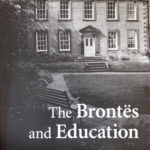
The Brontës and Education (paperback)
All the seven Brontë novels are concerned with education in both senses, that of upbringing as well as that of learning. The Brontë sisters all worked as teachers before they became published novelists. In spite of the prevalence of education in the sisters' lives and fiction, however, this is the first full-length book on the subject. Marianne Thormählen explores how their representations of fictional teachers and schools engage with the intense debates on education in the nineteenth century, drawing on a wealth of documentary evidence about educational theory and practice in the lifetime of the Brontës. This study offers much new information both about the Brontës and their books and about the most urgent issue in early-nineteenth-century British social politics: the education of the people, of all classes and both sexes.
The Brontës and Education, hardback
The Brontës and Education, paperback
Reviews so far
'Compelling and unique ... This thoroughly researched volume looks at ... contemporaneous education controversies. Summing up: highly recommended.' Choice
'... writes with considerable panache and vigor. In this reviewer's experience the book makes a very enjoyable read not only for a scholar public but for a general audience as well'. www.bronteblog.blogspot.com.
Read the whole review at http://bronteblog.blogspot.com/2007/07/bronts-and-education-review.html
'... crisp, objective and lively ... Thormählen triumphs in the light she shines on the educational world in which the family lived ... This book is an exciting helpmate in the struggle to secure a firm understanding of factors that fed the Brontë sisters' imaginative development ...' Brontë Studies
''Thormählen's prose is lucid yet sophisticated, each paragraph redolent with pithy thoughts and new twists on familiar truths ... Thormählen guides us sure-footedly ... [the notes constitute] a veritable textbook on early nineteenth-century education ... [The Brontës and Education is] a deeply satisfying work that enriches our appreciation of the Brontës and their world." Modern Philology


Kremberg, en julberättelse
Träsnidarmästaren Jacob Kremberg kom förmodligen från Nordtyskland. Många danska och sydsvenska kyrkor smyckas av hans verk, tillkomna i början av 1600-talet. Han är centralgestalten i denna novell, som skildrar händelser en kall decembernatt i en skånsk lantkyrka. 'Kremberg: En julberättelse' är dock ingen dokumentär redogörelse utan en historia om fantasi och skapande tillkommen på fantasins egna villkor.
Den lilla publikationen, som väger 27 gram och kostar 40 SEK, är det idealiska 'julkortet' till litterärt intresserade vänner och affärsbekanta.

T.S. Eliot at the Turn of the Century
In 1993, a group of Eliot scholars came together in Lund to address the question of T. S. Eliot´s standing a hundred years after his death and on the threshold of a new millennium. The 1990s were years of Eliot-bashing; much was made of his alleged misogyny, racism, and anti-semitism, and even at the beginning of decade it was obvious that the poet´s status had suffered. Bernard Bergonzi, Lois A. Cuddy, Barbara Everett, Rudolf Germer, Nancy D. Hargrove, M. Teresa Gibert-Maceda, Stephen Medcalf, A. David Moody, Kristian Smidt, and Marianne Thormählen analysed different aspects of Eliot´s work and found enough strength and power in it to be cautiously optimistic about his future. Emrys Jones read a paper on a Stratford production of Murder in the Cathedral which focused attention on Eliot´s writing for the stage, and Grover Smith, who could not attend the meeting, contributed a new approach to The Cocktail Party. All these essays were published in the volume called T. S. Eliot at the Turn of the Century, including A. David Moody on Eliot and the mind of Europe, Nancy D. Hargrove on Eliot´s annus mirabilis in Paris (1910-1911), Bernard Bergonzi on Eliot and the city, Lois A. Cuddy on evolution in Eliot´s work, Rudolf Germer on Eliot and religion, M. Teresa Gibert-Maceda on women and Eliot, Marianne Thormählen on the problem of the individual personality in Eliot´s poetry and plays, Stephen Medcalf on the Sweeney poems, Kristian Smidt on Eliot´s less than fair treatment of the Victorians in his criticism, and Barbara Everett on the unpleasantness of meeting Mr Eliot. The volume also contains an edited version of a panel discussion about Eliot´s standing and Eliot studies. (Lund Studies in English 86, 1984; 244 pp, ed. Marianne Thormählen.)

Rethinking Modernism
Around 1979, scholars adopted the term "modernism" as a designation for the radical changes that took place in Anglo-American literature in the early twentieth century. The concept lent prestige to works and authors associated with it, encouraging the development of a vast body of criticism while blocking academic recognition of literature to which it does not readily apply. In Rethinking Modernism, published by Palgrave Macmillan in 2003 and edited by Marianne Thormählen, fifteen scholars of modernism subject the concept to sceptical scrutiny as they revisit their special areas of expertise. The general question they all face is not so much "what was modernism?" -- a familiar question -- as "was/is modernism?" Their results show that although "modernism" remains a useful concept under certain conditions, for them -- as for any reader of this book -- modernism will never be quite the same again.
The book ends with a 20-page bibliography of works on modernism in two parts, compiled by the editor; the Literary Research/Recherche littéraire reviewer called it "comprehensive and invaluable". Other reviewers have praised the book as forming a "both focused and vigorous" volume (The Yearbook of English Studies) and as offering noteworthy "considerations of category breakers and the construction of categories by the reception of literary works" (The Review of English Studies).
https://www.palgrave.com/page/detail/rethinking-modernism-marianne-thormählen/?sf1=barcode&st1=9781403911803

De närvarande
Innehåller åtta sträva, intensiva berättelser ur samtiden som präglas av en illusionslös psykologi, där medkänsla ändå är utgångspunkten, och en ovanlig förmåga till satir och svart humor. Om sitt författarskap skriver Thormählen själv: Det ställer människan och möjligheterna i medelpunkten. Med varje gestalt börjar för mig en ny livserfarenhet, jag följer den och det ofta absurda försöket att fylla tillvaronskorta tidsrymd med en innebörd. För att kunna finnas till, måste man först beröra jorden; ett par av de gestalter jag beskriver glöder och förkolnar vid försöket. Andra finner åtminstone hoppet om ett fotfäste.
Beställ via förlagets hemsida, www.ellerstroms.se


Reviews
There are no reviews yet.