


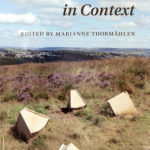
Rochester – The Poems in Context (paperback)
359.00 kr
The 1999 Oxford University Press edition by Harold Love of the works of John Wilmot, 2nd Earl of Rochester, praises Marianne Thormählen’s Rochester: The Poems in Context (Cambridge University Press, 1993; a paperback edition appeared in 2006) as the most up-to-date book on Rochester’s poetry, a “fresh, personal, and profoundly learned” study (pp. xlvi-xlvii). Other scholars have called it “splendid” (The Yearbook of English Studies), “intelligent and careful” (The Review of English Studies), “judicious” (Times Literary Supplement), and “smart and useful … a treasure trove of information [for which] readers of Rochester will be indebted to Ms Thormählen for years to come” (The Scriblerian).
Marianne Thormählen regards Rochester as a serious poet who devoted much time and care to his verse and aimed for the highest standards in his writing. This view runs counter to the traditional idea of Rochester as the “wicked earl” who wrote with ease; but she bolsters it with convincing evidence of painstaking literary desk-work, deliberate exploitation and subversion of poetical conventions, and subtly crafted references to people and events in Charles II’s and Louis XIV’s Europe. Rochester’s much-talked-about obscenities are shown to belong within a sombre framework of dissatisfaction with sensual pursuits and distrust of male sexual ability. The book ends with a consideration of Rochester’s famous deathbed conversion. A select bibliography directs the reader to every notable work on Rochester up to 1990.
Rochester: The Poems in Context, hardback
Rochester: The Poems in Context, paperback
Related products

Eine Wintertaufe
und andere weihnachtliche Erzählungen
JMB Verlag, 2010
Das Phänomen „Weihnacht“ hat schon viele Schriftsteller/innen fasziniert. Einige Weihnachtsgeschichten, z. B. Charles Dickens’ A Christmas Carol, sind mittlerweile Klassiker der Weltliteratur. Das Thema erschöpft sich nicht; immer wieder gibt es neue Aspekte von diesem Fest der Hoffnung, das mitten im Winter den Alltag vorübergehend vertreibt. Dazu gehören die bis zum Heiligabend aufgesparten Erwartungen, die manchmal erfüllt werden und manchmal nicht. Axel Thormählen wollte eigentlich nur die eine echte Weihnachtsgeschichte schreiben und dabei das Geheimnis lüften, was Menschen mit diesem Fest verbindet. Es hat sich aber erwiesen, dass das mit einer einzigen Geschichte nicht möglich ist. Allerdings unterscheiden sich die hier vorliegenden fünf Erzählungen wohl in ihrem Ausgangspunkt, doch nicht in der Aussage, nämlich dass Wunder passieren, auch wenn sie als solche nicht wahrgenommen werden. Zuweilen geschehen sie eben gerade zur Weihnachtszeit.
Bestellung für Eine Wintertaufe und andere weihnachtliche Erzählungen an Jens Bolm .

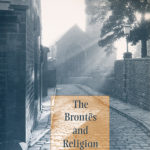
The Brontës and Religion (paperback)
appeared from Cambridge University Press in 1999. The first full-length study of religion in the Brontë fiction, it shows how the Brontës' familiarity with the contemporary debates on doctrinal, ethical, and ecclesiastical issues informs their novels. Divided into four parts, the book examines denominations, doctrines, ethics, and clerics in the work of the Brontës. The analyses of the novels clarify the constant interplay of human and divine love in their development. While demonstrating that the Brontës' fiction is usually in agreement with the basic tenets of Evangelical Anglicanism, The Brontës and Religion emphasises the characteristic spiritual freedom and audacity of the Brontës. Lucid and vigorously written, it opens up new perspectives for Brontë specialists and enthusiasts alike on a fundamental aspect of the novels greatly neglected in recent decades.
Excerpts from reviews: "[a] well-informed [study] based on scrupulous readings and meticulous judgments" (Times Literary Supplement); "[the author's] willingness to read with the grain of the novels' religion makes for absorbing reading" (Victorian Studies); "a refreshingly textual study of the Brontës' fiction" (The Review of English Studies); "a work of extraordinarily comprehensive scholarship" (The Journal of Ecclesiastical History); "the kind of writing which will endure and remain valuable for many years to come" (Theology); "I very much enjoyed this book" (Reviews in Religion & Theology).
The Brontës and Religion, hardback
The Brontës and Religion, paperback

Rochester – The Poems in Context (hardback)
The 1999 Oxford University Press edition by Harold Love of the works of John Wilmot, 2nd Earl of Rochester, praises Marianne Thormählen's Rochester: The Poems in Context (Cambridge University Press, 1993; a paperback edition appeared in 2006) as the most up-to-date book on Rochester's poetry, a "fresh, personal, and profoundly learned" study (pp. xlvi-xlvii). Other scholars have called it "splendid" (The Yearbook of English Studies), "intelligent and careful" (The Review of English Studies), "judicious" (Times Literary Supplement), and "smart and useful ... a treasure trove of information [for which] readers of Rochester will be indebted to Ms Thormählen for years to come" (The Scriblerian).
Marianne Thormählen regards Rochester as a serious poet who devoted much time and care to his verse and aimed for the highest standards in his writing. This view runs counter to the traditional idea of Rochester as the "wicked earl" who wrote with ease; but she bolsters it with convincing evidence of painstaking literary desk-work, deliberate exploitation and subversion of poetical conventions, and subtly crafted references to people and events in Charles II's and Louis XIV's Europe. Rochester's much-talked-about obscenities are shown to belong within a sombre framework of dissatisfaction with sensual pursuits and distrust of male sexual ability. The book ends with a consideration of Rochester's famous deathbed conversion. A select bibliography directs the reader to every notable work on Rochester up to 1990.
Rochester: The Poems in Context, hardback
Rochester: The Poems in Context, paperback

Eliot’s Animals
T. S. Eliot´s poems and plays are full of animals, from the alley cats of the early poems by way of the eagle, leopards, and unicorns in Ash-Wednesday to the birds in Four Quartets. Marianne Thormählen´s Eliot´s Animals takes you on a guided tour of Eliot´s bestiary, showing how the poet brought a rich variety of ideas about animals into his texts and invested those texts with layers of meaning derived from, for instance, Dante, Baudelaire, and the Bible. Eliot´s Animals is a book to dip into for the Eliot reader curious to see how a particular scene can be perceived with reference to the function of a particular animal image. There is no need to read it straight through -- but those who do will learn something new about Eliot´s range and subtlety in handling symbolic features. (Lund Studies in English No. 70, 1984; 197 pp.)

Rethinking Modernism
Around 1979, scholars adopted the term "modernism" as a designation for the radical changes that took place in Anglo-American literature in the early twentieth century. The concept lent prestige to works and authors associated with it, encouraging the development of a vast body of criticism while blocking academic recognition of literature to which it does not readily apply. In Rethinking Modernism, published by Palgrave Macmillan in 2003 and edited by Marianne Thormählen, fifteen scholars of modernism subject the concept to sceptical scrutiny as they revisit their special areas of expertise. The general question they all face is not so much "what was modernism?" -- a familiar question -- as "was/is modernism?" Their results show that although "modernism" remains a useful concept under certain conditions, for them -- as for any reader of this book -- modernism will never be quite the same again.
The book ends with a 20-page bibliography of works on modernism in two parts, compiled by the editor; the Literary Research/Recherche littéraire reviewer called it "comprehensive and invaluable". Other reviewers have praised the book as forming a "both focused and vigorous" volume (The Yearbook of English Studies) and as offering noteworthy "considerations of category breakers and the construction of categories by the reception of literary works" (The Review of English Studies).
https://www.palgrave.com/page/detail/rethinking-modernism-marianne-thormählen/?sf1=barcode&st1=9781403911803

Wilhelm
Banktjänstemannen Frieder K. är en vanlig familjefar som ställs inför ett ovanligt problem. Vissa tecken tyder på, att hans just avlidne far Wilhelm inte utan vidare låter sig bringas ur världen. Wilhelm dyker upp på det mest oväntade platser, och vissa handlingar finns inte där de borde vara. Frieder offrar dyrbara semesterdagar för att lösa "mysteriet Wilhelm" men blir bara alltmer osäker. Hans välordnade värld hänger helt plötsligt inte ihop längre. Frieder förändras under sitt sökande efter Wilhelm. Han börjar accepteraockså det ovissa och skrämmande i tillvaron, och gränsen mellan hans och faderns identiteter blir alltmer diffus för honom. Ur hans synvinkel blir tankegångar och handlingarsom för utomstående ter sig absurda, för att inte säga groteska, enbart logiska och nödvändiga.
Romanen om Frieder och hans far utspelar sig inom en generations nutid och förflutna, en generation vars första år sammanföll med Tredje Rikets Tyskland.
Beställ via förlagets hemsida, www.ellerstroms.se


Reviews
There are no reviews yet.