


Rethinking Modernism
1170.00 kr
Around 1979, scholars adopted the term “modernism” as a designation for the radical changes that took place in Anglo-American literature in the early twentieth century. The concept lent prestige to works and authors associated with it, encouraging the development of a vast body of criticism while blocking academic recognition of literature to which it does not readily apply. In Rethinking Modernism, published by Palgrave Macmillan in 2003 and edited by Marianne Thormählen, fifteen scholars of modernism subject the concept to sceptical scrutiny as they revisit their special areas of expertise. The general question they all face is not so much “what was modernism?” — a familiar question — as “was/is modernism?” Their results show that although “modernism” remains a useful concept under certain conditions, for them — as for any reader of this book — modernism will never be quite the same again.
The book ends with a 20-page bibliography of works on modernism in two parts, compiled by the editor; the Literary Research/Recherche littéraire reviewer called it “comprehensive and invaluable”. Other reviewers have praised the book as forming a “both focused and vigorous” volume (The Yearbook of English Studies) and as offering noteworthy “considerations of category breakers and the construction of categories by the reception of literary works” (The Review of English Studies).
https://www.palgrave.com/page/detail/rethinking-modernism-marianne-thormählen/?sf1=barcode&st1=9781403911803
Related products

The Ladislaw Case
This sequel to Middlemarch is also in a limited sense a sequel to Dickens’ Bleak House. While there is no need to have read either novel in order to enjoy The Ladislaw Case, acquaintance with George Eliot’s characters and Dickens’ Inspector Bucket enhances the reader’s pleasure in following the twists and turns of the plot and the tribulations of the characters.
Read the blurb text
Click here for a synopsis
Here is a chapter from the book: [Ladislaw Chapter 23.pdf]
"Thormählen writes very well, moves the plot along, and keeps the tension at just the right pitch throughout. She does a particularly good job extrapolating Eliot's characters, convincingly making Ladislaw much less attractive than he is in Eliot's novel and revealing the implications of Rosamond's chilling egotism ... Thormählen ... has created an entertaining re-vision of a major Victorian novel [which] successfully extrapolates elements in [Middlemarch] that both illuminate and criticize [it]." George P. Landow, Editor-in-Chief, The Victorian Web.
'One of the pleasures of reading Imke Thormählen's murder mystery ... is that it works on two levels: even as it unravels the question of who committed the murder, the novel provides a thought-provoking sequel to George Eliot's Middlemarch. /---/ [It contains] ... strong narrative suspense, psychological realism, and a credible Victorian setting ... [I]maginatively and insightfully faithful to George Eliot's vision ... this novel ... reveals some of the hitherto untapped potential that lies latent in ... Eliot's novel and is, at the same time, a very good read indeed.'
Micael M. Clarke, George Eliot -- George Henry Lewes Studies, Nos. 64-65
'The characterization of the main protagonists in the story is generally consistent with that created by George Eliot ... Characters impress us or repel us by what they say. There is no difficulty here in recognizing their voices: the clear sombre voice of the disappointed Dr Lydgate; the excessively polite voice of Rosamond, so quick to criticize her husband and add to his sense of failure in his professional and social life; the irritable and yet self-critical voice of the young politician Ladislaw; the certain tones of Lady Chettam secure in her social position, correcting her sister "Dodo" and yet always caring for her ... If the reader has also devoured Middlemarch, he or she will be eager to meet old friends, to be reminded of some of the darker strands of that story, and ultimately, tense with expectations, excited to discover the murderer. We are kept guessing until very near the end and for most readers the revelation will be a real surprise.'
Ruth and Michael Harris, The George Eliot Review 44 (2013), 88-89

Der Grüne Himmel
JMB Verlag, 2015
Illustrationen von Peter Kirchhof
„Schlachtfeld Menschheit“: Unter diesem Thema wird in der kleinen südschwedischen Universitätsstadt Lund eine zehntägige Konferenz abgehalten, an der führende Geisteswissenschaftler aus aller Welt teilnehmen. Parallel dazu tagen im medizinischen Bereich Experten der Kardiologie. Bei einem Ausflug am ersten Tag vermischen sich einige der Teilnehmer in einem kleinen Wald außerhalb von Lund. Dieser Wald ist danach der wirkliche Mittelpunkt der Handlung. Jeden Tag treffen sich dort verschiedene Personen und machen Spaziergänge, wobei zuweilen merkwürdige Dinge passieren.
Dieser Roman besteht aus Episoden. Während der jeweiligen Spaziergänge werden zentrale Aspekte unseres Menschenlebens angesprochen. Dazu gehören Alter und Kindheit, Liebe, Krankheit und Tod sowie Kunst, Lüge und Zukunft. Axel Thormählen beschreibt die Geschehnisse in einem warmen und zeitweise humoristischen Ton. Ohne vor den tiefsten Unruhen der Menschenseele haltzumachen, bietet dieser zugleich besinnliche und fantasievolle Roman vor allem Trost.

Der Weg nach Altenburg
JMB Verlag, 2013
Illustrationen von Peter Kirchhof
"Ein schauerlicher Bericht aus dem Niemandsland des Lebens".
Bestellung für Der Weg nach Altenburg an Jens Bolm .
http://www.nwzonline.de/person/thormählen,axel
Dass sein Freund Hannes sich das Leben genommen hat, kann der Erzähler nicht glauben und reist daher an den Ort seiner Kindheit, um Hannes zu suchen. Statt des gebuchten Express-Zuges steigt er allerdings in den Regional-Schnellzug mit gleichem Fahrziel ein. Die eigenartige Stimmung der Passagiere, ihr entweder manisches oder geradezu phlegmatisches Verhalten und der düstere, unwirkliche Ausblick aus dem Fenster während dieser langen Bahnfahrt hätten als Warnung gesehen werden können, denn als der Protagonist in Rade am Fluss ankommt, ist nichts mehr so, wie es war.
Die Stadt, die ihm schon seit seiner Kindheit vertraut ist, erkennt er kaum wieder. Sie ist wie ausgestorben, die meisten Lichter sind aus, die Stadt liegt in fast vollkommener Dunkelheit und die wenigen Menschen, denen er begegnet, scheinen ihrer Identität beraubt zu sein. Seine Suche nach Ansprache, nach einem Telefon, einem Taxi oder nach Hannes wird immer beängstigender, bis er in einer Bar findet, was er gesucht hat. Oder doch nicht? Die menschenleeren Straßen, die skurrilen Bars und die einst vertraute Stadt, die nurmehr von Namenlosen bevölkert scheint, werden immer mehr zu einem Alptraum. Gelingt es dem Erzähler nach Altenburg zurückzukehren oder sitzt er bis in alle Ewigkeit in dieser düsteren Stadt fest?
Mich hat die poetische Sprache des Erzählers und die mystische Stimmung der Geschichte sofort in den Bann gezogen. Ich fühlte mich an Kafka oder E.T.A. Hoffmann erinnert und nahm wie selbstverständlich neben den Reisenden im Zug Platz. Fast schien die nicht nur äußerliche Heimatlosigkeit der anderen auch von mir Besitz zu ergreifen, so dass ich die wenigen Seiten wie im Fieber umblätterte und doch am Ende froh war, noch einmal den Absprung vom Zug geschafft zu haben.
Fazit: Es handelt sich um ein kleines Büchlein, aber um eine feine Geschichte. Auch die vier Illustrationen von Peter K. Kirchhof sind sehr passend und stimmungsvoll. Die Handlung von “Der Weg nach Altenburg” ist in der Gegenwart angesiedelt, doch die Form folgt der Tradition des fantastischen Erzählens. Eine mitreißende Geschichte, die ins Innere und dann wieder an den Ausgangspunkt zurückführt. Besonders für eine kurze Bahnfahrt geeignet, die noch Zeit zum Nachdenken lässt, die dieser Lektüre unbedingt folgen sollte.
Laila Mahfouz, 7. Januar 2014

Rochester – The Poems in Context (hardback)
The 1999 Oxford University Press edition by Harold Love of the works of John Wilmot, 2nd Earl of Rochester, praises Marianne Thormählen's Rochester: The Poems in Context (Cambridge University Press, 1993; a paperback edition appeared in 2006) as the most up-to-date book on Rochester's poetry, a "fresh, personal, and profoundly learned" study (pp. xlvi-xlvii). Other scholars have called it "splendid" (The Yearbook of English Studies), "intelligent and careful" (The Review of English Studies), "judicious" (Times Literary Supplement), and "smart and useful ... a treasure trove of information [for which] readers of Rochester will be indebted to Ms Thormählen for years to come" (The Scriblerian).
Marianne Thormählen regards Rochester as a serious poet who devoted much time and care to his verse and aimed for the highest standards in his writing. This view runs counter to the traditional idea of Rochester as the "wicked earl" who wrote with ease; but she bolsters it with convincing evidence of painstaking literary desk-work, deliberate exploitation and subversion of poetical conventions, and subtly crafted references to people and events in Charles II's and Louis XIV's Europe. Rochester's much-talked-about obscenities are shown to belong within a sombre framework of dissatisfaction with sensual pursuits and distrust of male sexual ability. The book ends with a consideration of Rochester's famous deathbed conversion. A select bibliography directs the reader to every notable work on Rochester up to 1990.
Rochester: The Poems in Context, hardback
Rochester: The Poems in Context, paperback

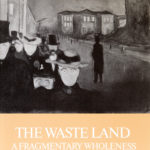
The Waste Land a Fragmentary Wholeness
T. S. Eliot is felt by many to have been the poet of the twentieth century, and his famous The Waste Land is the best known poem of that century in English. Many people have found it hard to come to grips with, though, and reading Eliot remains a challenge.
"A hoax", "tripe", a piece of "rhythmical grumbling" (the latter is the poet´s own description) -- is T. S. Eliot´s The Waste Land really worth all the attention it has come in for since its publication in 1922? Thousands of literary critics and scholars have been writing about it -- what inspired such enormous efforts? And will the new millennium gratefully drop it into semi-oblivion as a period piece belonging to the world of yesterday? You´ll know more about The Waste Land, and about Eliot, and about the way you yourself respond to modern poetry after reading Marianne Thormählen´s The Waste Land: A Fragmentary Wholeness. First published in 1978, it has become a standard work on the poem, partly thanks to its generous annotation and bibliography which have helped many students chart their own way through this challenging terrain. The book tells you about the poem´s gestation, Ezra Pound´s midwifery, metre and rhythm in the Waste Land, and the symbolic imagery that is such a powerful dimension in all of Eliot´s work. It also suggests ways of freeing the reader from the obligation to make it all hang together by working out a consistent "plan" or "structure". Let The Waste Land: A Fragmentary Wholeness help you form your own relationship with the greatest modernist poem, unhampered by preconceived notions and unworried by its alleged "difficulty". (Lund Studies in English No. 52, 1978; 248 pp.)

English Now
Selected Papers from the 20th IAUPE Conference in Lund 2007
In August 2007, about 200 senior researchers in the field of English, language and literature, spent a week in Lund taking the temperature of their subject. Nearly 150 papers were presented in 19 conference sections. This volume contains a lively selection, chosen by the 37 Section Chairs as saying something about where research in the discipline is heading. Also included are the two plenary lectures about the state and future of English in the academy by Elizabeth Traugott (language) and Helen Vendler (literature).
A common feature unites this diverse collection: English literature and language as a vital concern for real people, all over the world and in the past as well as the present. Here 'English' reaffirms its human credentials, moving forward with fresh confidence and enthusiasm. (Lund Studies in English 112, ISBN 978-91-976935-0-9)
Order from skriftserier@ht.lu.se


Reviews
There are no reviews yet.