


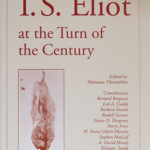
Rochester – The Poems in Context (hardback)
770.00 kr
The 1999 Oxford University Press edition by Harold Love of the works of John Wilmot, 2nd Earl of Rochester, praises Marianne Thormählen’s Rochester: The Poems in Context (Cambridge University Press, 1993; a paperback edition appeared in 2006) as the most up-to-date book on Rochester’s poetry, a “fresh, personal, and profoundly learned” study (pp. xlvi-xlvii). Other scholars have called it “splendid” (The Yearbook of English Studies), “intelligent and careful” (The Review of English Studies), “judicious” (Times Literary Supplement), and “smart and useful … a treasure trove of information [for which] readers of Rochester will be indebted to Ms Thormählen for years to come” (The Scriblerian).
Marianne Thormählen regards Rochester as a serious poet who devoted much time and care to his verse and aimed for the highest standards in his writing. This view runs counter to the traditional idea of Rochester as the “wicked earl” who wrote with ease; but she bolsters it with convincing evidence of painstaking literary desk-work, deliberate exploitation and subversion of poetical conventions, and subtly crafted references to people and events in Charles II’s and Louis XIV’s Europe. Rochester’s much-talked-about obscenities are shown to belong within a sombre framework of dissatisfaction with sensual pursuits and distrust of male sexual ability. The book ends with a consideration of Rochester’s famous deathbed conversion. A select bibliography directs the reader to every notable work on Rochester up to 1990.
Rochester: The Poems in Context, hardback
Rochester: The Poems in Context, paperback
Related products

The Ladislaw Case
This sequel to Middlemarch is also in a limited sense a sequel to Dickens’ Bleak House. While there is no need to have read either novel in order to enjoy The Ladislaw Case, acquaintance with George Eliot’s characters and Dickens’ Inspector Bucket enhances the reader’s pleasure in following the twists and turns of the plot and the tribulations of the characters.
Read the blurb text
Click here for a synopsis
Here is a chapter from the book: [Ladislaw Chapter 23.pdf]
"Thormählen writes very well, moves the plot along, and keeps the tension at just the right pitch throughout. She does a particularly good job extrapolating Eliot's characters, convincingly making Ladislaw much less attractive than he is in Eliot's novel and revealing the implications of Rosamond's chilling egotism ... Thormählen ... has created an entertaining re-vision of a major Victorian novel [which] successfully extrapolates elements in [Middlemarch] that both illuminate and criticize [it]." George P. Landow, Editor-in-Chief, The Victorian Web.
'One of the pleasures of reading Imke Thormählen's murder mystery ... is that it works on two levels: even as it unravels the question of who committed the murder, the novel provides a thought-provoking sequel to George Eliot's Middlemarch. /---/ [It contains] ... strong narrative suspense, psychological realism, and a credible Victorian setting ... [I]maginatively and insightfully faithful to George Eliot's vision ... this novel ... reveals some of the hitherto untapped potential that lies latent in ... Eliot's novel and is, at the same time, a very good read indeed.'
Micael M. Clarke, George Eliot -- George Henry Lewes Studies, Nos. 64-65
'The characterization of the main protagonists in the story is generally consistent with that created by George Eliot ... Characters impress us or repel us by what they say. There is no difficulty here in recognizing their voices: the clear sombre voice of the disappointed Dr Lydgate; the excessively polite voice of Rosamond, so quick to criticize her husband and add to his sense of failure in his professional and social life; the irritable and yet self-critical voice of the young politician Ladislaw; the certain tones of Lady Chettam secure in her social position, correcting her sister "Dodo" and yet always caring for her ... If the reader has also devoured Middlemarch, he or she will be eager to meet old friends, to be reminded of some of the darker strands of that story, and ultimately, tense with expectations, excited to discover the murderer. We are kept guessing until very near the end and for most readers the revelation will be a real surprise.'
Ruth and Michael Harris, The George Eliot Review 44 (2013), 88-89

Der Grüne Himmel
JMB Verlag, 2015
Illustrationen von Peter Kirchhof
„Schlachtfeld Menschheit“: Unter diesem Thema wird in der kleinen südschwedischen Universitätsstadt Lund eine zehntägige Konferenz abgehalten, an der führende Geisteswissenschaftler aus aller Welt teilnehmen. Parallel dazu tagen im medizinischen Bereich Experten der Kardiologie. Bei einem Ausflug am ersten Tag vermischen sich einige der Teilnehmer in einem kleinen Wald außerhalb von Lund. Dieser Wald ist danach der wirkliche Mittelpunkt der Handlung. Jeden Tag treffen sich dort verschiedene Personen und machen Spaziergänge, wobei zuweilen merkwürdige Dinge passieren.
Dieser Roman besteht aus Episoden. Während der jeweiligen Spaziergänge werden zentrale Aspekte unseres Menschenlebens angesprochen. Dazu gehören Alter und Kindheit, Liebe, Krankheit und Tod sowie Kunst, Lüge und Zukunft. Axel Thormählen beschreibt die Geschehnisse in einem warmen und zeitweise humoristischen Ton. Ohne vor den tiefsten Unruhen der Menschenseele haltzumachen, bietet dieser zugleich besinnliche und fantasievolle Roman vor allem Trost.
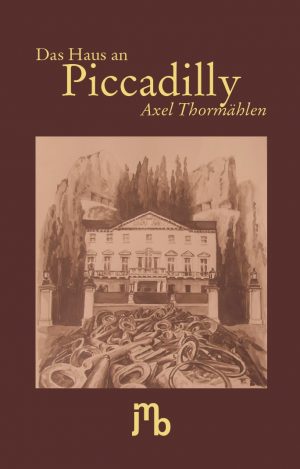
Das Haus an Piccadilly
JMB Verlag, 08 Juni 2012
Ein geheimnisvolles Haus in London erregt seit Jahren die Neugier von Leo Norman. Durch unheimliche Umstände gelangt er an das riesige Schlüsselbund dieses Hauses und stattet ihm einen unvergesslichen Besuch ab ...
Bestellung für Das Haus an Piccadilly an Jens Bolm .
"Hinter Thormählens Sprachwitz steckt ein Philosoph!"
Kunst + Kultur No. I/09

A Happy Man or Der Glückliche
Les Figues Press, Los Angeles 2008
http://www.lesfigues.com
Selected short stories by Axel Thormählen, bilingual edition (English/German)
The tales in this collection could hardly be more diverse where content is concerned, ranging from the Christmas story 23 December to the young love of Dyke Crest Lane No. 1. We also meet the Construction Worker who keeps interrupting our lives with his relentless noise, the ancient church servant Thomas who inhabits the cathedrals where we catch our breath, and the old woman for whom the only uplifting thing is the Water Tower which rises near her house. In the familiar Course of Things, illness, healing process, and death go hand in hand; the Happy Man knows that, too, whereas the Churchgoer is still searching for a monumental meaning in life. We’d better make use of our Visiting Hour even if things keep breaking into little pieces, again and again.
https://www.spdbooks.org/Products/9781934254042/a-happy-man-and-other-stories.aspx
Book Reviews Blog
http://www.dalkeyarchive.com/catalog/show_comment/1594
http://skylightbooks.blogspot.com/2008/07/my-encounter-with-happy-man.html
http://www.bookslut.com/fiction/2008_11_013686.php
http://www.theshortreview.com/reviews/AxelThormahlenAHappyMan.htm
Interview with Axel Thormählen
http://www.theshortreview.com/authors/AxelThormahlen.htm

Verksamhetsberättelser
Ytterligare 13 konturskarpa berättelser. De nya berättelserna visar på en breddning av Thormählens litterära register. Förutom inslaget av svidande samhällssatir, som känns igen från de tidigare böckerna, ingår tre sinsemellan mycket olika kärlekshistorier i denna samling. Vidare finns reflexioner kring skeendena inom och utom den tysk-svenska verklighetens råmärken och en avslutande, klassisk julberättelse som suddar ut gränser av mer än ett slag.
"Berättelserna präglas av Thormählens finurliga infallsvinklar och ironiska distans och försätter läsaren omväxlande i en road och eftertänksamt allvarlig stämning."
Monika Ivarsson, Skånska Dagbladet
"Inte minst den skenbart paradoxala föreningen av satir och solidaritet, av lekfull distans och djup humanitet, gör läsningen till ett oavbrutet nöje."
Magnus Eriksson, Svenska Dagbladet
"Hans verksamhetsberättelser vill värna det skapande momentet i människors liv."
Göran Lundstedt, Sydsvenska Dagbladet
Beställ via förlagets hemsida, www.ellerstroms.se

Wilhelm
Banktjänstemannen Frieder K. är en vanlig familjefar som ställs inför ett ovanligt problem. Vissa tecken tyder på, att hans just avlidne far Wilhelm inte utan vidare låter sig bringas ur världen. Wilhelm dyker upp på det mest oväntade platser, och vissa handlingar finns inte där de borde vara. Frieder offrar dyrbara semesterdagar för att lösa "mysteriet Wilhelm" men blir bara alltmer osäker. Hans välordnade värld hänger helt plötsligt inte ihop längre. Frieder förändras under sitt sökande efter Wilhelm. Han börjar accepteraockså det ovissa och skrämmande i tillvaron, och gränsen mellan hans och faderns identiteter blir alltmer diffus för honom. Ur hans synvinkel blir tankegångar och handlingarsom för utomstående ter sig absurda, för att inte säga groteska, enbart logiska och nödvändiga.
Romanen om Frieder och hans far utspelar sig inom en generations nutid och förflutna, en generation vars första år sammanföll med Tredje Rikets Tyskland.
Beställ via förlagets hemsida, www.ellerstroms.se


Reviews
There are no reviews yet.