


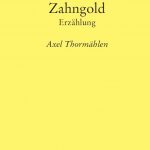
Wilhelm gibt keine Ruhe
200.00 kr
Der Bankangestellte Frieder K., ein gewöhnlicher Familienvater, wird vor ein ungewöhnliches Problem gestellt: Sein eben verstorbener Vater Wilhelm lässt sich nicht ohne weiteres aus der Welt schaffen. Vielmehr erscheint er an unerwarteten Stellen, und wichtige Dokumente fehlen.
Frieder wird zunehmend verunsichert. Die Grenze zwischen seiner eigenen Identität und der des Vaters verschwimmt mehr und mehr. Gedanken und Handlungen, die Aussenstehenden absurd oder gar grotesk erscheinen, werden plötzlich logisch und notwendig.
Der Roman, in den 1980er Jahren geschrieben, erschien 1993 in schwedischer Übersetzung beim Verlag Ellerström.
Dies ist die deutsche Erstveröffentlichung.
Zu bestellen bei:
https://www.thalia.de/shop/home/artikeldetails/A1069397870
https://ellmauer-buch.buchkatalog.at/wilhelm-gibt-keine-ruhe-9783947911837
I Sverige:
https://www.adlibris.com/se/bok/wilhelm-gibt-keine-ruhe-9783947911837
Related products

The Brontës and Education (paperback)
All the seven Brontë novels are concerned with education in both senses, that of upbringing as well as that of learning. The Brontë sisters all worked as teachers before they became published novelists. In spite of the prevalence of education in the sisters' lives and fiction, however, this is the first full-length book on the subject. Marianne Thormählen explores how their representations of fictional teachers and schools engage with the intense debates on education in the nineteenth century, drawing on a wealth of documentary evidence about educational theory and practice in the lifetime of the Brontës. This study offers much new information both about the Brontës and their books and about the most urgent issue in early-nineteenth-century British social politics: the education of the people, of all classes and both sexes.
The Brontës and Education, hardback
The Brontës and Education, paperback
Reviews so far
'Compelling and unique ... This thoroughly researched volume looks at ... contemporaneous education controversies. Summing up: highly recommended.' Choice
'... writes with considerable panache and vigor. In this reviewer's experience the book makes a very enjoyable read not only for a scholar public but for a general audience as well'. www.bronteblog.blogspot.com.
Read the whole review at http://bronteblog.blogspot.com/2007/07/bronts-and-education-review.html
'... crisp, objective and lively ... Thormählen triumphs in the light she shines on the educational world in which the family lived ... This book is an exciting helpmate in the struggle to secure a firm understanding of factors that fed the Brontë sisters' imaginative development ...' Brontë Studies
''Thormählen's prose is lucid yet sophisticated, each paragraph redolent with pithy thoughts and new twists on familiar truths ... Thormählen guides us sure-footedly ... [the notes constitute] a veritable textbook on early nineteenth-century education ... [The Brontës and Education is] a deeply satisfying work that enriches our appreciation of the Brontës and their world." Modern Philology

Der letzte Wikinger
JMB Verlag Hannover
ISBN 9783944342542
Illustrationen von Peter Kirchhof
Endlich gibt es eine Auswahl der besten Erzählungen von Axel Thormählen auf Deutsch:
Über die in den U.S.A. herausgegebene Auswahl A Happy Man and other Stories (Les Figues Press) schrieb Claude Rawson, Literaturprofessor an der Yale University: „Ein entzückendes, ungewöhnliches, hochindividuelles Buch mit einer milden Weisheit, manchmal beunruhigend oder belustigend oder beides zugleich, aber immer unverwechselbar.“

Rethinking Modernism
Around 1979, scholars adopted the term "modernism" as a designation for the radical changes that took place in Anglo-American literature in the early twentieth century. The concept lent prestige to works and authors associated with it, encouraging the development of a vast body of criticism while blocking academic recognition of literature to which it does not readily apply. In Rethinking Modernism, published by Palgrave Macmillan in 2003 and edited by Marianne Thormählen, fifteen scholars of modernism subject the concept to sceptical scrutiny as they revisit their special areas of expertise. The general question they all face is not so much "what was modernism?" -- a familiar question -- as "was/is modernism?" Their results show that although "modernism" remains a useful concept under certain conditions, for them -- as for any reader of this book -- modernism will never be quite the same again.
The book ends with a 20-page bibliography of works on modernism in two parts, compiled by the editor; the Literary Research/Recherche littéraire reviewer called it "comprehensive and invaluable". Other reviewers have praised the book as forming a "both focused and vigorous" volume (The Yearbook of English Studies) and as offering noteworthy "considerations of category breakers and the construction of categories by the reception of literary works" (The Review of English Studies).
https://www.palgrave.com/page/detail/rethinking-modernism-marianne-thormählen/?sf1=barcode&st1=9781403911803

English Now
Selected Papers from the 20th IAUPE Conference in Lund 2007
In August 2007, about 200 senior researchers in the field of English, language and literature, spent a week in Lund taking the temperature of their subject. Nearly 150 papers were presented in 19 conference sections. This volume contains a lively selection, chosen by the 37 Section Chairs as saying something about where research in the discipline is heading. Also included are the two plenary lectures about the state and future of English in the academy by Elizabeth Traugott (language) and Helen Vendler (literature).
A common feature unites this diverse collection: English literature and language as a vital concern for real people, all over the world and in the past as well as the present. Here 'English' reaffirms its human credentials, moving forward with fresh confidence and enthusiasm. (Lund Studies in English 112, ISBN 978-91-976935-0-9)
Order from skriftserier@ht.lu.se

The Brontës in Context (hardback)
Edited by: Marianne Thormählen, Lunds Universitet, Sweden
Very few families produce one outstanding writer. The Brontë family produced three. The works of Charlotte, Emily and Anne remain immensely popular, and are increasingly being studied in relation to the surroundings and wider context that formed them. The forty-two new essays in this book tell 'the Brontë story' as it has never been told before, drawing on the latest research and the best available scholarship while offering new perspectives on the writings of the sisters. A section on Brontë criticism traces their reception to the present day. The works of the sisters are explored in the context of social, political and cultural developments in early-nineteenth-century Britain, with attention given to religion, education, art, print culture, agriculture, law and medicine. Crammed with information, The Brontës in Context shows how the Brontës' fiction interacts with the spirit of the time, suggesting reasons for its enduring fascination.
The Brontës in Context, hardback
The Brontës in Context, paperback
Reviews so far
'General readers will enjoy it as much as Brontë students and fans, and its careful avoidance of anything too topical or controversial will keep it fresh for years. Thormählen's high-quality contributors, assembly of reliable facts and data, pertinent commentary, maps, illustrations, splendid chronology and further reading lists make it everything that one could wish for.' Times Literary Supplement
'The high quality of scholarship in combination with the clarity of the jargon-free writing make it a book accessible to all. Those new to the Brontës will receive a solid introduction; those familiar with the Brontë story will be surprised by new information and fresh insights. Much of the knowledge one gains over the years from reading many disparate books is gathered together into this one volume, helping the reader to develop a coherent and comprehensive understanding of this literary family's life and historical contexts. I would recommend The Brontës in Context not only to those interested in the Brontës, but to anyone studying literature in the Victorian age. /---/ [It] will serve current and future generations of Brontë readers, students and scholars admirably; it will also prompt new avenues of study as readers delve deeper into the variety of issues that this volume covers. The Brontës in Context exemplifies the best writing, communicating not only information but also pleasure to the reader who enters its pages, ensuring that it will have a lasting contribution to make to the world of Brontë studies.' Brontë Studies
'Readers of The Brontës in Context will gain fresh insights into the writings of the sisters, and also how those writings relate to the concerns of their time and contribute to our understanding of the nineteenth-century mindset. Already my copy is getting thumb-marked, and I'm sure the book will be a valued handbook for years to come.' Emerald Insight

Verksamhetsberättelser
Ytterligare 13 konturskarpa berättelser. De nya berättelserna visar på en breddning av Thormählens litterära register. Förutom inslaget av svidande samhällssatir, som känns igen från de tidigare böckerna, ingår tre sinsemellan mycket olika kärlekshistorier i denna samling. Vidare finns reflexioner kring skeendena inom och utom den tysk-svenska verklighetens råmärken och en avslutande, klassisk julberättelse som suddar ut gränser av mer än ett slag.
"Berättelserna präglas av Thormählens finurliga infallsvinklar och ironiska distans och försätter läsaren omväxlande i en road och eftertänksamt allvarlig stämning."
Monika Ivarsson, Skånska Dagbladet
"Inte minst den skenbart paradoxala föreningen av satir och solidaritet, av lekfull distans och djup humanitet, gör läsningen till ett oavbrutet nöje."
Magnus Eriksson, Svenska Dagbladet
"Hans verksamhetsberättelser vill värna det skapande momentet i människors liv."
Göran Lundstedt, Sydsvenska Dagbladet
Beställ via förlagets hemsida, www.ellerstroms.se


Reviews
There are no reviews yet.