


JOSÉPHINE
Utdrag ur Joséphine, kap. 51 (‘Kungen av Rom’):
Jag hade i hemlighet förhoppningar om att få stanna något längre i Malmaison. Men det fann sig inte Bonaparte i. Han kunde dock inte bekväma sig till att meddela mig detta själv utan sände den oerhört generade Cambacérès. Ärkekanslern var inte precis någon mme de Rémusat, och han meddelade mig sin härskares vilja på ett ganska tafatt sätt. Visserligen ville kejsaren inte tvinga mig till någonting, men med hänsyn till kejsarinnans tillstånd var det bäst att jag reste till Navarra så fort som möjligt.
— Hon är rätt så uppriven, det stackars lilla livet, avslutade Cambacérès allvarligt. Kejsaren — och jag också för den delen — skulle starkt rekommendera att ers majestät åker.
Jag tyckte att Marie-Louise, som hade privilegiet att få tillbringa varje dag med Bonaparte och dessutom bar på hans barn, var den sista som hade någon anledning att vara “uppriven”. Trots det beslöt jag mig för att lyda Cambacérès råd. Ingen skulle påstå att jag var ute efter att såra Marie-Louise.
Livet på Navarra var ganska behagligt. Mme de Rémusat hade följt med den här gången, och till och med hon verkade ha riktigt roligt. Mme d’Arberg var däremot något bekymrad. Monsieur Pourtalès hade börjat visa stort intresse för mme Gazzani, och snart var romansen ett faktum. Mlle de Castellane-Norantes försäkran om att hon “nog skulle kunna locka tillbaka” monsieur Pourtalès gjorde inte mme d’Arberg lugnare. Men jag var så glad över att mme Gazzani lyckats glömma Bonaparte att jag omöjligt kunde dela hennes upprördhet.
Så kom den tjugonde mars 1811. Ryktet spred sig att kejsarinnan snart skulle föda. Hela dagen var det ingen vid mitt hov som kunde koncentrera sig på biljard eller läsning. Det blev en nästan olidlig väntan tills fram på kvällen, då det första kanonskottet hördes från det intilliggande Évreux.
— Gudskelov! utbrast jag. Barnet lever! Bara det nu är en pojke.
Ingen vågade säga något de första tjugoen skotten. Vid det tjugoandra bröt ett jubel utan like ut. Det var en pojke. Jag satt länge utan att få fram ett ord. Mme d’Arberg såg ängsligt på mig.
— Hur är det fatt, ers majestät? Är ni ledsen?
— Ledsen! ekade jag. Hur skulle jag kunna vara ledsen? Detta är ju vad vi alla hoppats på! Vad kejsaren måste vara lycklig. Ursäkta mig ett ögonblick, jag måste skriva till honom. Och sedan skall vi hålla en stor och påkostad bal. Det här måste firas!
Alla tyckte att jag bar mig ädelt och hjältemodigt åt vid nyheten om tronföljarens födelse. Men jag förtjänade inte deras beröm. Jag var faktiskt glad. Bonaparte hade nu äntligen sin arvtagare, och kanske ännu viktigare, en egen son. Inte desto mindre glömde han inte att i ett brev till mig tillägga, efter att ha yttrat sin faderliga stolthet:
“Jag är mycket nöjd med Eugène. Han har aldrig på något sätt varit en besvikelse för mig.”
Jag uppfattade de korthuggna raderna som den absoluta höjden av ömhet och omtänksamhet. I flera dagar tråkade jag ut alla som jag kunde få tag på med mina svärmiska lovsånger om kejsarens hänsynsfullhet. Vad som fick Bonaparte att framstå i ett om möjligt ännu mer förklarat ljus var att han skickade Eugéne till mig med information om vad som hade hänt vid förlossningen och annat skvaller från hovet.
Eugène livade upp oss allesammans. Han kom på idén att starta tävlingar i allt möjligt, såsom biljard, dans och till och med fiske. Ingen av damerna var alltför ledsen om de förlorade, eftersom Eugène brukade ge dem en kram eller kyss på kinden som “tröstpris”. Jag misstänkte att den unga söta mlle Ducrest — ett tämligen nytt tillskott till mitt hov — till och med ibland spelade dåligt med flit vid biljardtävlingarna. Både jag och mme d’Arberg höll emellertid ett vakande öga på de båda.
Eugène hade sett till att de gröna “hovklänningarna” avskaffades. Han förklarade att han ville se “den prydliga gräsmattan förvandlas till en blomstrande äng”. Alla de unga flickorna vid mitt hov enades om att det var mycket tjusigt sagt av Eugène och skaffade sig genast de mest färgglada klänningar de kunde hitta. Hovetiketten försvann så gott som helt tillsammans med de gröna klänningarna. Mme d’Arberg var förtvivlad, men det fanns inte mycket hon kunde göra. I stället försökte hon förgäves få någon reda i mina finanser som — trots att jag hade ett underhåll på tre miljoner franc om året — var så till den grad katastrofala att Bonaparte till och med en gång sände sin finansminister för att läxa upp mig. Jag antar att mme d’Arberg drog en suck av lättnad då jag fick tillstånd att återvända till Malmaison, där hon inte behövde ta så mycket ansvar för mig. Det var nog väl att hon inte visste vad jag föresatt mig att göra när jag kom till Paris. Jag var nämligen fast besluten att se Bonapartes son och Frankrikes blivande kejsare — som Bonaparte högtidligt givit titeln “kungen av Rom”. (S. 444-46)
Related products

The Ladislaw Case
This sequel to Middlemarch is also in a limited sense a sequel to Dickens’ Bleak House. While there is no need to have read either novel in order to enjoy The Ladislaw Case, acquaintance with George Eliot’s characters and Dickens’ Inspector Bucket enhances the reader’s pleasure in following the twists and turns of the plot and the tribulations of the characters.
Read the blurb text
Click here for a synopsis
Here is a chapter from the book: [Ladislaw Chapter 23.pdf]
"Thormählen writes very well, moves the plot along, and keeps the tension at just the right pitch throughout. She does a particularly good job extrapolating Eliot's characters, convincingly making Ladislaw much less attractive than he is in Eliot's novel and revealing the implications of Rosamond's chilling egotism ... Thormählen ... has created an entertaining re-vision of a major Victorian novel [which] successfully extrapolates elements in [Middlemarch] that both illuminate and criticize [it]." George P. Landow, Editor-in-Chief, The Victorian Web.
'One of the pleasures of reading Imke Thormählen's murder mystery ... is that it works on two levels: even as it unravels the question of who committed the murder, the novel provides a thought-provoking sequel to George Eliot's Middlemarch. /---/ [It contains] ... strong narrative suspense, psychological realism, and a credible Victorian setting ... [I]maginatively and insightfully faithful to George Eliot's vision ... this novel ... reveals some of the hitherto untapped potential that lies latent in ... Eliot's novel and is, at the same time, a very good read indeed.'
Micael M. Clarke, George Eliot -- George Henry Lewes Studies, Nos. 64-65
'The characterization of the main protagonists in the story is generally consistent with that created by George Eliot ... Characters impress us or repel us by what they say. There is no difficulty here in recognizing their voices: the clear sombre voice of the disappointed Dr Lydgate; the excessively polite voice of Rosamond, so quick to criticize her husband and add to his sense of failure in his professional and social life; the irritable and yet self-critical voice of the young politician Ladislaw; the certain tones of Lady Chettam secure in her social position, correcting her sister "Dodo" and yet always caring for her ... If the reader has also devoured Middlemarch, he or she will be eager to meet old friends, to be reminded of some of the darker strands of that story, and ultimately, tense with expectations, excited to discover the murderer. We are kept guessing until very near the end and for most readers the revelation will be a real surprise.'
Ruth and Michael Harris, The George Eliot Review 44 (2013), 88-89

Der Weg nach Altenburg (ePub & PDF)
JMB Verlag, 2013
Illustrationen von Peter Kirchhof
"Ein schauerlicher Bericht aus dem Niemandsland des Lebens".
Bestellung für Der Weg nach Altenburg an Jens Bolm .
http://www.nwzonline.de/person/thormählen,axel
Dass sein Freund Hannes sich das Leben genommen hat, kann der Erzähler nicht glauben und reist daher an den Ort seiner Kindheit, um Hannes zu suchen. Statt des gebuchten Express-Zuges steigt er allerdings in den Regional-Schnellzug mit gleichem Fahrziel ein. Die eigenartige Stimmung der Passagiere, ihr entweder manisches oder geradezu phlegmatisches Verhalten und der düstere, unwirkliche Ausblick aus dem Fenster während dieser langen Bahnfahrt hätten als Warnung gesehen werden können, denn als der Protagonist in Rade am Fluss ankommt, ist nichts mehr so, wie es war.
Die Stadt, die ihm schon seit seiner Kindheit vertraut ist, erkennt er kaum wieder. Sie ist wie ausgestorben, die meisten Lichter sind aus, die Stadt liegt in fast vollkommener Dunkelheit und die wenigen Menschen, denen er begegnet, scheinen ihrer Identität beraubt zu sein. Seine Suche nach Ansprache, nach einem Telefon, einem Taxi oder nach Hannes wird immer beängstigender, bis er in einer Bar findet, was er gesucht hat. Oder doch nicht? Die menschenleeren Straßen, die skurrilen Bars und die einst vertraute Stadt, die nurmehr von Namenlosen bevölkert scheint, werden immer mehr zu einem Alptraum. Gelingt es dem Erzähler nach Altenburg zurückzukehren oder sitzt er bis in alle Ewigkeit in dieser düsteren Stadt fest?
Mich hat die poetische Sprache des Erzählers und die mystische Stimmung der Geschichte sofort in den Bann gezogen. Ich fühlte mich an Kafka oder E.T.A. Hoffmann erinnert und nahm wie selbstverständlich neben den Reisenden im Zug Platz. Fast schien die nicht nur äußerliche Heimatlosigkeit der anderen auch von mir Besitz zu ergreifen, so dass ich die wenigen Seiten wie im Fieber umblätterte und doch am Ende froh war, noch einmal den Absprung vom Zug geschafft zu haben.
Fazit: Es handelt sich um ein kleines Büchlein, aber um eine feine Geschichte. Auch die vier Illustrationen von Peter K. Kirchhof sind sehr passend und stimmungsvoll. Die Handlung von “Der Weg nach Altenburg” ist in der Gegenwart angesiedelt, doch die Form folgt der Tradition des fantastischen Erzählens. Eine mitreißende Geschichte, die ins Innere und dann wieder an den Ausgangspunkt zurückführt. Besonders für eine kurze Bahnfahrt geeignet, die noch Zeit zum Nachdenken lässt, die dieser Lektüre unbedingt folgen sollte.
Laila Mahfouz, 7. Januar 2014

T.S. Eliot at the Turn of the Century
In 1993, a group of Eliot scholars came together in Lund to address the question of T. S. Eliot´s standing a hundred years after his death and on the threshold of a new millennium. The 1990s were years of Eliot-bashing; much was made of his alleged misogyny, racism, and anti-semitism, and even at the beginning of decade it was obvious that the poet´s status had suffered. Bernard Bergonzi, Lois A. Cuddy, Barbara Everett, Rudolf Germer, Nancy D. Hargrove, M. Teresa Gibert-Maceda, Stephen Medcalf, A. David Moody, Kristian Smidt, and Marianne Thormählen analysed different aspects of Eliot´s work and found enough strength and power in it to be cautiously optimistic about his future. Emrys Jones read a paper on a Stratford production of Murder in the Cathedral which focused attention on Eliot´s writing for the stage, and Grover Smith, who could not attend the meeting, contributed a new approach to The Cocktail Party. All these essays were published in the volume called T. S. Eliot at the Turn of the Century, including A. David Moody on Eliot and the mind of Europe, Nancy D. Hargrove on Eliot´s annus mirabilis in Paris (1910-1911), Bernard Bergonzi on Eliot and the city, Lois A. Cuddy on evolution in Eliot´s work, Rudolf Germer on Eliot and religion, M. Teresa Gibert-Maceda on women and Eliot, Marianne Thormählen on the problem of the individual personality in Eliot´s poetry and plays, Stephen Medcalf on the Sweeney poems, Kristian Smidt on Eliot´s less than fair treatment of the Victorians in his criticism, and Barbara Everett on the unpleasantness of meeting Mr Eliot. The volume also contains an edited version of a panel discussion about Eliot´s standing and Eliot studies. (Lund Studies in English 86, 1984; 244 pp, ed. Marianne Thormählen.)

Eliot’s Animals
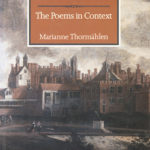
T. S. Eliot´s poems and plays are full of animals, from the alley cats of the early poems by way of the eagle, leopards, and unicorns in Ash-Wednesday to the birds in Four Quartets. Marianne Thormählen´s Eliot´s Animals takes you on a guided tour of Eliot´s bestiary, showing how the poet brought a rich variety of ideas about animals into his texts and invested those texts with layers of meaning derived from, for instance, Dante, Baudelaire, and the Bible. Eliot´s Animals is a book to dip into for the Eliot reader curious to see how a particular scene can be perceived with reference to the function of a particular animal image. There is no need to read it straight through -- but those who do will learn something new about Eliot´s range and subtlety in handling symbolic features. (Lund Studies in English No. 70, 1984; 197 pp.)

The Brontës and Education (hardback)
All the seven Brontë novels are concerned with education in both senses, that of upbringing as well as that of learning. The Brontë sisters all worked as teachers before they became published novelists. In spite of the prevalence of education in the sisters' lives and fiction, however, this is the first full-length book on the subject. Marianne Thormählen explores how their representations of fictional teachers and schools engage with the intense debates on education in the nineteenth century, drawing on a wealth of documentary evidence about educational theory and practice in the lifetime of the Brontës. This study offers much new information both about the Brontës and their books and about the most urgent issue in early-nineteenth-century British social politics: the education of the people, of all classes and both sexes.
The Brontës and Education, hardback
The Brontës and Education, paperback
Reviews so far
'Compelling and unique ... This thoroughly researched volume looks at ... contemporaneous education controversies. Summing up: highly recommended.' Choice
'... writes with considerable panache and vigor. In this reviewer's experience the book makes a very enjoyable read not only for a scholar public but for a general audience as well'. www.bronteblog.blogspot.com.
Read the whole review at http://bronteblog.blogspot.com/2007/07/bronts-and-education-review.html
'... crisp, objective and lively ... Thormählen triumphs in the light she shines on the educational world in which the family lived ... This book is an exciting helpmate in the struggle to secure a firm understanding of factors that fed the Brontë sisters' imaginative development ...' Brontë Studies
''Thormählen's prose is lucid yet sophisticated, each paragraph redolent with pithy thoughts and new twists on familiar truths ... Thormählen guides us sure-footedly ... [the notes constitute] a veritable textbook on early nineteenth-century education ... [The Brontës and Education is] a deeply satisfying work that enriches our appreciation of the Brontës and their world." Modern Philology

Wilhelm
Banktjänstemannen Frieder K. är en vanlig familjefar som ställs inför ett ovanligt problem. Vissa tecken tyder på, att hans just avlidne far Wilhelm inte utan vidare låter sig bringas ur världen. Wilhelm dyker upp på det mest oväntade platser, och vissa handlingar finns inte där de borde vara. Frieder offrar dyrbara semesterdagar för att lösa "mysteriet Wilhelm" men blir bara alltmer osäker. Hans välordnade värld hänger helt plötsligt inte ihop längre. Frieder förändras under sitt sökande efter Wilhelm. Han börjar accepteraockså det ovissa och skrämmande i tillvaron, och gränsen mellan hans och faderns identiteter blir alltmer diffus för honom. Ur hans synvinkel blir tankegångar och handlingarsom för utomstående ter sig absurda, för att inte säga groteska, enbart logiska och nödvändiga.
Romanen om Frieder och hans far utspelar sig inom en generations nutid och förflutna, en generation vars första år sammanföll med Tredje Rikets Tyskland.
Beställ via förlagets hemsida, www.ellerstroms.se


Reviews
There are no reviews yet.