



JOSÉPHINE
Utdrag ur Joséphine, kap. 51 (‘Kungen av Rom’):
Jag hade i hemlighet förhoppningar om att få stanna något längre i Malmaison. Men det fann sig inte Bonaparte i. Han kunde dock inte bekväma sig till att meddela mig detta själv utan sände den oerhört generade Cambacérès. Ärkekanslern var inte precis någon mme de Rémusat, och han meddelade mig sin härskares vilja på ett ganska tafatt sätt. Visserligen ville kejsaren inte tvinga mig till någonting, men med hänsyn till kejsarinnans tillstånd var det bäst att jag reste till Navarra så fort som möjligt.
— Hon är rätt så uppriven, det stackars lilla livet, avslutade Cambacérès allvarligt. Kejsaren — och jag också för den delen — skulle starkt rekommendera att ers majestät åker.
Jag tyckte att Marie-Louise, som hade privilegiet att få tillbringa varje dag med Bonaparte och dessutom bar på hans barn, var den sista som hade någon anledning att vara “uppriven”. Trots det beslöt jag mig för att lyda Cambacérès råd. Ingen skulle påstå att jag var ute efter att såra Marie-Louise.
Livet på Navarra var ganska behagligt. Mme de Rémusat hade följt med den här gången, och till och med hon verkade ha riktigt roligt. Mme d’Arberg var däremot något bekymrad. Monsieur Pourtalès hade börjat visa stort intresse för mme Gazzani, och snart var romansen ett faktum. Mlle de Castellane-Norantes försäkran om att hon “nog skulle kunna locka tillbaka” monsieur Pourtalès gjorde inte mme d’Arberg lugnare. Men jag var så glad över att mme Gazzani lyckats glömma Bonaparte att jag omöjligt kunde dela hennes upprördhet.
Så kom den tjugonde mars 1811. Ryktet spred sig att kejsarinnan snart skulle föda. Hela dagen var det ingen vid mitt hov som kunde koncentrera sig på biljard eller läsning. Det blev en nästan olidlig väntan tills fram på kvällen, då det första kanonskottet hördes från det intilliggande Évreux.
— Gudskelov! utbrast jag. Barnet lever! Bara det nu är en pojke.
Ingen vågade säga något de första tjugoen skotten. Vid det tjugoandra bröt ett jubel utan like ut. Det var en pojke. Jag satt länge utan att få fram ett ord. Mme d’Arberg såg ängsligt på mig.
— Hur är det fatt, ers majestät? Är ni ledsen?
— Ledsen! ekade jag. Hur skulle jag kunna vara ledsen? Detta är ju vad vi alla hoppats på! Vad kejsaren måste vara lycklig. Ursäkta mig ett ögonblick, jag måste skriva till honom. Och sedan skall vi hålla en stor och påkostad bal. Det här måste firas!
Alla tyckte att jag bar mig ädelt och hjältemodigt åt vid nyheten om tronföljarens födelse. Men jag förtjänade inte deras beröm. Jag var faktiskt glad. Bonaparte hade nu äntligen sin arvtagare, och kanske ännu viktigare, en egen son. Inte desto mindre glömde han inte att i ett brev till mig tillägga, efter att ha yttrat sin faderliga stolthet:
“Jag är mycket nöjd med Eugène. Han har aldrig på något sätt varit en besvikelse för mig.”
Jag uppfattade de korthuggna raderna som den absoluta höjden av ömhet och omtänksamhet. I flera dagar tråkade jag ut alla som jag kunde få tag på med mina svärmiska lovsånger om kejsarens hänsynsfullhet. Vad som fick Bonaparte att framstå i ett om möjligt ännu mer förklarat ljus var att han skickade Eugéne till mig med information om vad som hade hänt vid förlossningen och annat skvaller från hovet.
Eugène livade upp oss allesammans. Han kom på idén att starta tävlingar i allt möjligt, såsom biljard, dans och till och med fiske. Ingen av damerna var alltför ledsen om de förlorade, eftersom Eugène brukade ge dem en kram eller kyss på kinden som “tröstpris”. Jag misstänkte att den unga söta mlle Ducrest — ett tämligen nytt tillskott till mitt hov — till och med ibland spelade dåligt med flit vid biljardtävlingarna. Både jag och mme d’Arberg höll emellertid ett vakande öga på de båda.
Eugène hade sett till att de gröna “hovklänningarna” avskaffades. Han förklarade att han ville se “den prydliga gräsmattan förvandlas till en blomstrande äng”. Alla de unga flickorna vid mitt hov enades om att det var mycket tjusigt sagt av Eugène och skaffade sig genast de mest färgglada klänningar de kunde hitta. Hovetiketten försvann så gott som helt tillsammans med de gröna klänningarna. Mme d’Arberg var förtvivlad, men det fanns inte mycket hon kunde göra. I stället försökte hon förgäves få någon reda i mina finanser som — trots att jag hade ett underhåll på tre miljoner franc om året — var så till den grad katastrofala att Bonaparte till och med en gång sände sin finansminister för att läxa upp mig. Jag antar att mme d’Arberg drog en suck av lättnad då jag fick tillstånd att återvända till Malmaison, där hon inte behövde ta så mycket ansvar för mig. Det var nog väl att hon inte visste vad jag föresatt mig att göra när jag kom till Paris. Jag var nämligen fast besluten att se Bonapartes son och Frankrikes blivande kejsare — som Bonaparte högtidligt givit titeln “kungen av Rom”. (S. 444-46)
Related products

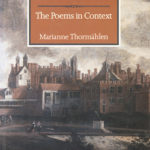
Rochester – The Poems in Context (paperback)
The 1999 Oxford University Press edition by Harold Love of the works of John Wilmot, 2nd Earl of Rochester, praises Marianne Thormählen's Rochester: The Poems in Context (Cambridge University Press, 1993; a paperback edition appeared in 2006) as the most up-to-date book on Rochester's poetry, a "fresh, personal, and profoundly learned" study (pp. xlvi-xlvii). Other scholars have called it "splendid" (The Yearbook of English Studies), "intelligent and careful" (The Review of English Studies), "judicious" (Times Literary Supplement), and "smart and useful ... a treasure trove of information [for which] readers of Rochester will be indebted to Ms Thormählen for years to come" (The Scriblerian).
Marianne Thormählen regards Rochester as a serious poet who devoted much time and care to his verse and aimed for the highest standards in his writing. This view runs counter to the traditional idea of Rochester as the "wicked earl" who wrote with ease; but she bolsters it with convincing evidence of painstaking literary desk-work, deliberate exploitation and subversion of poetical conventions, and subtly crafted references to people and events in Charles II's and Louis XIV's Europe. Rochester's much-talked-about obscenities are shown to belong within a sombre framework of dissatisfaction with sensual pursuits and distrust of male sexual ability. The book ends with a consideration of Rochester's famous deathbed conversion. A select bibliography directs the reader to every notable work on Rochester up to 1990.
Rochester: The Poems in Context, hardback
Rochester: The Poems in Context, paperback

The Brontës and Education (paperback)
All the seven Brontë novels are concerned with education in both senses, that of upbringing as well as that of learning. The Brontë sisters all worked as teachers before they became published novelists. In spite of the prevalence of education in the sisters' lives and fiction, however, this is the first full-length book on the subject. Marianne Thormählen explores how their representations of fictional teachers and schools engage with the intense debates on education in the nineteenth century, drawing on a wealth of documentary evidence about educational theory and practice in the lifetime of the Brontës. This study offers much new information both about the Brontës and their books and about the most urgent issue in early-nineteenth-century British social politics: the education of the people, of all classes and both sexes.
The Brontës and Education, hardback
The Brontës and Education, paperback
Reviews so far
'Compelling and unique ... This thoroughly researched volume looks at ... contemporaneous education controversies. Summing up: highly recommended.' Choice
'... writes with considerable panache and vigor. In this reviewer's experience the book makes a very enjoyable read not only for a scholar public but for a general audience as well'. www.bronteblog.blogspot.com.
Read the whole review at http://bronteblog.blogspot.com/2007/07/bronts-and-education-review.html
'... crisp, objective and lively ... Thormählen triumphs in the light she shines on the educational world in which the family lived ... This book is an exciting helpmate in the struggle to secure a firm understanding of factors that fed the Brontë sisters' imaginative development ...' Brontë Studies
''Thormählen's prose is lucid yet sophisticated, each paragraph redolent with pithy thoughts and new twists on familiar truths ... Thormählen guides us sure-footedly ... [the notes constitute] a veritable textbook on early nineteenth-century education ... [The Brontës and Education is] a deeply satisfying work that enriches our appreciation of the Brontës and their world." Modern Philology

Der letzte Wikinger
JMB Verlag Hannover
ISBN 9783944342542
Illustrationen von Peter Kirchhof
Endlich gibt es eine Auswahl der besten Erzählungen von Axel Thormählen auf Deutsch:
Über die in den U.S.A. herausgegebene Auswahl A Happy Man and other Stories (Les Figues Press) schrieb Claude Rawson, Literaturprofessor an der Yale University: „Ein entzückendes, ungewöhnliches, hochindividuelles Buch mit einer milden Weisheit, manchmal beunruhigend oder belustigend oder beides zugleich, aber immer unverwechselbar.“
Rochester – The Poems in Context (hardback)
The 1999 Oxford University Press edition by Harold Love of the works of John Wilmot, 2nd Earl of Rochester, praises Marianne Thormählen's Rochester: The Poems in Context (Cambridge University Press, 1993; a paperback edition appeared in 2006) as the most up-to-date book on Rochester's poetry, a "fresh, personal, and profoundly learned" study (pp. xlvi-xlvii). Other scholars have called it "splendid" (The Yearbook of English Studies), "intelligent and careful" (The Review of English Studies), "judicious" (Times Literary Supplement), and "smart and useful ... a treasure trove of information [for which] readers of Rochester will be indebted to Ms Thormählen for years to come" (The Scriblerian).
Marianne Thormählen regards Rochester as a serious poet who devoted much time and care to his verse and aimed for the highest standards in his writing. This view runs counter to the traditional idea of Rochester as the "wicked earl" who wrote with ease; but she bolsters it with convincing evidence of painstaking literary desk-work, deliberate exploitation and subversion of poetical conventions, and subtly crafted references to people and events in Charles II's and Louis XIV's Europe. Rochester's much-talked-about obscenities are shown to belong within a sombre framework of dissatisfaction with sensual pursuits and distrust of male sexual ability. The book ends with a consideration of Rochester's famous deathbed conversion. A select bibliography directs the reader to every notable work on Rochester up to 1990.
Rochester: The Poems in Context, hardback
Rochester: The Poems in Context, paperback

English Now
Selected Papers from the 20th IAUPE Conference in Lund 2007
In August 2007, about 200 senior researchers in the field of English, language and literature, spent a week in Lund taking the temperature of their subject. Nearly 150 papers were presented in 19 conference sections. This volume contains a lively selection, chosen by the 37 Section Chairs as saying something about where research in the discipline is heading. Also included are the two plenary lectures about the state and future of English in the academy by Elizabeth Traugott (language) and Helen Vendler (literature).
A common feature unites this diverse collection: English literature and language as a vital concern for real people, all over the world and in the past as well as the present. Here 'English' reaffirms its human credentials, moving forward with fresh confidence and enthusiasm. (Lund Studies in English 112, ISBN 978-91-976935-0-9)
Order from skriftserier@ht.lu.se

De närvarande
Innehåller åtta sträva, intensiva berättelser ur samtiden som präglas av en illusionslös psykologi, där medkänsla ändå är utgångspunkten, och en ovanlig förmåga till satir och svart humor. Om sitt författarskap skriver Thormählen själv: Det ställer människan och möjligheterna i medelpunkten. Med varje gestalt börjar för mig en ny livserfarenhet, jag följer den och det ofta absurda försöket att fylla tillvaronskorta tidsrymd med en innebörd. För att kunna finnas till, måste man först beröra jorden; ett par av de gestalter jag beskriver glöder och förkolnar vid försöket. Andra finner åtminstone hoppet om ett fotfäste.
Beställ via förlagets hemsida, www.ellerstroms.se


Reviews
There are no reviews yet.