


Kremberg, en julberättelse
40.00 kr
Träsnidarmästaren Jacob Kremberg kom förmodligen från Nordtyskland. Många danska och sydsvenska kyrkor smyckas av hans verk, tillkomna i början av 1600-talet. Han är centralgestalten i denna novell, som skildrar händelser en kall decembernatt i en skånsk lantkyrka. ‘Kremberg: En julberättelse’ är dock ingen dokumentär redogörelse utan en historia om fantasi och skapande tillkommen på fantasins egna villkor.
Den lilla publikationen, som väger 27 gram och kostar 40 SEK, är det idealiska ‘julkortet’ till litterärt intresserade vänner och affärsbekanta.
Related products

Rochester – The Poems in Context (paperback)
The 1999 Oxford University Press edition by Harold Love of the works of John Wilmot, 2nd Earl of Rochester, praises Marianne Thormählen's Rochester: The Poems in Context (Cambridge University Press, 1993; a paperback edition appeared in 2006) as the most up-to-date book on Rochester's poetry, a "fresh, personal, and profoundly learned" study (pp. xlvi-xlvii). Other scholars have called it "splendid" (The Yearbook of English Studies), "intelligent and careful" (The Review of English Studies), "judicious" (Times Literary Supplement), and "smart and useful ... a treasure trove of information [for which] readers of Rochester will be indebted to Ms Thormählen for years to come" (The Scriblerian).
Marianne Thormählen regards Rochester as a serious poet who devoted much time and care to his verse and aimed for the highest standards in his writing. This view runs counter to the traditional idea of Rochester as the "wicked earl" who wrote with ease; but she bolsters it with convincing evidence of painstaking literary desk-work, deliberate exploitation and subversion of poetical conventions, and subtly crafted references to people and events in Charles II's and Louis XIV's Europe. Rochester's much-talked-about obscenities are shown to belong within a sombre framework of dissatisfaction with sensual pursuits and distrust of male sexual ability. The book ends with a consideration of Rochester's famous deathbed conversion. A select bibliography directs the reader to every notable work on Rochester up to 1990.
Rochester: The Poems in Context, hardback
Rochester: The Poems in Context, paperback

The Brontës and Religion (paperback)
appeared from Cambridge University Press in 1999. The first full-length study of religion in the Brontë fiction, it shows how the Brontës' familiarity with the contemporary debates on doctrinal, ethical, and ecclesiastical issues informs their novels. Divided into four parts, the book examines denominations, doctrines, ethics, and clerics in the work of the Brontës. The analyses of the novels clarify the constant interplay of human and divine love in their development. While demonstrating that the Brontës' fiction is usually in agreement with the basic tenets of Evangelical Anglicanism, The Brontës and Religion emphasises the characteristic spiritual freedom and audacity of the Brontës. Lucid and vigorously written, it opens up new perspectives for Brontë specialists and enthusiasts alike on a fundamental aspect of the novels greatly neglected in recent decades.
Excerpts from reviews: "[a] well-informed [study] based on scrupulous readings and meticulous judgments" (Times Literary Supplement); "[the author's] willingness to read with the grain of the novels' religion makes for absorbing reading" (Victorian Studies); "a refreshingly textual study of the Brontës' fiction" (The Review of English Studies); "a work of extraordinarily comprehensive scholarship" (The Journal of Ecclesiastical History); "the kind of writing which will endure and remain valuable for many years to come" (Theology); "I very much enjoyed this book" (Reviews in Religion & Theology).
The Brontës and Religion, hardback
The Brontës and Religion, paperback

Der Weg nach Altenburg (ePub & PDF)
JMB Verlag, 2013
Illustrationen von Peter Kirchhof
"Ein schauerlicher Bericht aus dem Niemandsland des Lebens".
Bestellung für Der Weg nach Altenburg an Jens Bolm .
http://www.nwzonline.de/person/thormählen,axel
Dass sein Freund Hannes sich das Leben genommen hat, kann der Erzähler nicht glauben und reist daher an den Ort seiner Kindheit, um Hannes zu suchen. Statt des gebuchten Express-Zuges steigt er allerdings in den Regional-Schnellzug mit gleichem Fahrziel ein. Die eigenartige Stimmung der Passagiere, ihr entweder manisches oder geradezu phlegmatisches Verhalten und der düstere, unwirkliche Ausblick aus dem Fenster während dieser langen Bahnfahrt hätten als Warnung gesehen werden können, denn als der Protagonist in Rade am Fluss ankommt, ist nichts mehr so, wie es war.
Die Stadt, die ihm schon seit seiner Kindheit vertraut ist, erkennt er kaum wieder. Sie ist wie ausgestorben, die meisten Lichter sind aus, die Stadt liegt in fast vollkommener Dunkelheit und die wenigen Menschen, denen er begegnet, scheinen ihrer Identität beraubt zu sein. Seine Suche nach Ansprache, nach einem Telefon, einem Taxi oder nach Hannes wird immer beängstigender, bis er in einer Bar findet, was er gesucht hat. Oder doch nicht? Die menschenleeren Straßen, die skurrilen Bars und die einst vertraute Stadt, die nurmehr von Namenlosen bevölkert scheint, werden immer mehr zu einem Alptraum. Gelingt es dem Erzähler nach Altenburg zurückzukehren oder sitzt er bis in alle Ewigkeit in dieser düsteren Stadt fest?
Mich hat die poetische Sprache des Erzählers und die mystische Stimmung der Geschichte sofort in den Bann gezogen. Ich fühlte mich an Kafka oder E.T.A. Hoffmann erinnert und nahm wie selbstverständlich neben den Reisenden im Zug Platz. Fast schien die nicht nur äußerliche Heimatlosigkeit der anderen auch von mir Besitz zu ergreifen, so dass ich die wenigen Seiten wie im Fieber umblätterte und doch am Ende froh war, noch einmal den Absprung vom Zug geschafft zu haben.
Fazit: Es handelt sich um ein kleines Büchlein, aber um eine feine Geschichte. Auch die vier Illustrationen von Peter K. Kirchhof sind sehr passend und stimmungsvoll. Die Handlung von “Der Weg nach Altenburg” ist in der Gegenwart angesiedelt, doch die Form folgt der Tradition des fantastischen Erzählens. Eine mitreißende Geschichte, die ins Innere und dann wieder an den Ausgangspunkt zurückführt. Besonders für eine kurze Bahnfahrt geeignet, die noch Zeit zum Nachdenken lässt, die dieser Lektüre unbedingt folgen sollte.
Laila Mahfouz, 7. Januar 2014
Der Weg nach Altenburg
JMB Verlag, 2013
Illustrationen von Peter Kirchhof
"Ein schauerlicher Bericht aus dem Niemandsland des Lebens".
Bestellung für Der Weg nach Altenburg an Jens Bolm .
http://www.nwzonline.de/person/thormählen,axel
Dass sein Freund Hannes sich das Leben genommen hat, kann der Erzähler nicht glauben und reist daher an den Ort seiner Kindheit, um Hannes zu suchen. Statt des gebuchten Express-Zuges steigt er allerdings in den Regional-Schnellzug mit gleichem Fahrziel ein. Die eigenartige Stimmung der Passagiere, ihr entweder manisches oder geradezu phlegmatisches Verhalten und der düstere, unwirkliche Ausblick aus dem Fenster während dieser langen Bahnfahrt hätten als Warnung gesehen werden können, denn als der Protagonist in Rade am Fluss ankommt, ist nichts mehr so, wie es war.
Die Stadt, die ihm schon seit seiner Kindheit vertraut ist, erkennt er kaum wieder. Sie ist wie ausgestorben, die meisten Lichter sind aus, die Stadt liegt in fast vollkommener Dunkelheit und die wenigen Menschen, denen er begegnet, scheinen ihrer Identität beraubt zu sein. Seine Suche nach Ansprache, nach einem Telefon, einem Taxi oder nach Hannes wird immer beängstigender, bis er in einer Bar findet, was er gesucht hat. Oder doch nicht? Die menschenleeren Straßen, die skurrilen Bars und die einst vertraute Stadt, die nurmehr von Namenlosen bevölkert scheint, werden immer mehr zu einem Alptraum. Gelingt es dem Erzähler nach Altenburg zurückzukehren oder sitzt er bis in alle Ewigkeit in dieser düsteren Stadt fest?
Mich hat die poetische Sprache des Erzählers und die mystische Stimmung der Geschichte sofort in den Bann gezogen. Ich fühlte mich an Kafka oder E.T.A. Hoffmann erinnert und nahm wie selbstverständlich neben den Reisenden im Zug Platz. Fast schien die nicht nur äußerliche Heimatlosigkeit der anderen auch von mir Besitz zu ergreifen, so dass ich die wenigen Seiten wie im Fieber umblätterte und doch am Ende froh war, noch einmal den Absprung vom Zug geschafft zu haben.
Fazit: Es handelt sich um ein kleines Büchlein, aber um eine feine Geschichte. Auch die vier Illustrationen von Peter K. Kirchhof sind sehr passend und stimmungsvoll. Die Handlung von “Der Weg nach Altenburg” ist in der Gegenwart angesiedelt, doch die Form folgt der Tradition des fantastischen Erzählens. Eine mitreißende Geschichte, die ins Innere und dann wieder an den Ausgangspunkt zurückführt. Besonders für eine kurze Bahnfahrt geeignet, die noch Zeit zum Nachdenken lässt, die dieser Lektüre unbedingt folgen sollte.
Laila Mahfouz, 7. Januar 2014

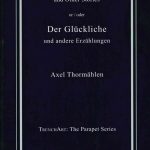
A Happy Man or Der Glückliche
Les Figues Press, Los Angeles 2008
http://www.lesfigues.com
Selected short stories by Axel Thormählen, bilingual edition (English/German)
The tales in this collection could hardly be more diverse where content is concerned, ranging from the Christmas story 23 December to the young love of Dyke Crest Lane No. 1. We also meet the Construction Worker who keeps interrupting our lives with his relentless noise, the ancient church servant Thomas who inhabits the cathedrals where we catch our breath, and the old woman for whom the only uplifting thing is the Water Tower which rises near her house. In the familiar Course of Things, illness, healing process, and death go hand in hand; the Happy Man knows that, too, whereas the Churchgoer is still searching for a monumental meaning in life. We’d better make use of our Visiting Hour even if things keep breaking into little pieces, again and again.
https://www.spdbooks.org/Products/9781934254042/a-happy-man-and-other-stories.aspx
Book Reviews Blog
http://www.dalkeyarchive.com/catalog/show_comment/1594
http://skylightbooks.blogspot.com/2008/07/my-encounter-with-happy-man.html
http://www.bookslut.com/fiction/2008_11_013686.php
http://www.theshortreview.com/reviews/AxelThormahlenAHappyMan.htm
Interview with Axel Thormählen
http://www.theshortreview.com/authors/AxelThormahlen.htm

The Brontës in Context (hardback)
Edited by: Marianne Thormählen, Lunds Universitet, Sweden
Very few families produce one outstanding writer. The Brontë family produced three. The works of Charlotte, Emily and Anne remain immensely popular, and are increasingly being studied in relation to the surroundings and wider context that formed them. The forty-two new essays in this book tell 'the Brontë story' as it has never been told before, drawing on the latest research and the best available scholarship while offering new perspectives on the writings of the sisters. A section on Brontë criticism traces their reception to the present day. The works of the sisters are explored in the context of social, political and cultural developments in early-nineteenth-century Britain, with attention given to religion, education, art, print culture, agriculture, law and medicine. Crammed with information, The Brontës in Context shows how the Brontës' fiction interacts with the spirit of the time, suggesting reasons for its enduring fascination.
The Brontës in Context, hardback
The Brontës in Context, paperback
Reviews so far
'General readers will enjoy it as much as Brontë students and fans, and its careful avoidance of anything too topical or controversial will keep it fresh for years. Thormählen's high-quality contributors, assembly of reliable facts and data, pertinent commentary, maps, illustrations, splendid chronology and further reading lists make it everything that one could wish for.' Times Literary Supplement
'The high quality of scholarship in combination with the clarity of the jargon-free writing make it a book accessible to all. Those new to the Brontës will receive a solid introduction; those familiar with the Brontë story will be surprised by new information and fresh insights. Much of the knowledge one gains over the years from reading many disparate books is gathered together into this one volume, helping the reader to develop a coherent and comprehensive understanding of this literary family's life and historical contexts. I would recommend The Brontës in Context not only to those interested in the Brontës, but to anyone studying literature in the Victorian age. /---/ [It] will serve current and future generations of Brontë readers, students and scholars admirably; it will also prompt new avenues of study as readers delve deeper into the variety of issues that this volume covers. The Brontës in Context exemplifies the best writing, communicating not only information but also pleasure to the reader who enters its pages, ensuring that it will have a lasting contribution to make to the world of Brontë studies.' Brontë Studies
'Readers of The Brontës in Context will gain fresh insights into the writings of the sisters, and also how those writings relate to the concerns of their time and contribute to our understanding of the nineteenth-century mindset. Already my copy is getting thumb-marked, and I'm sure the book will be a valued handbook for years to come.' Emerald Insight


Reviews
There are no reviews yet.