


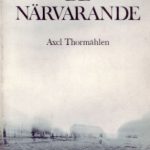
Wilhelm
120.00 kr
Banktjänstemannen Frieder K. är en vanlig familjefar som ställs inför ett ovanligt problem. Vissa tecken tyder på, att hans just avlidne far Wilhelm inte utan vidare låter sig bringas ur världen. Wilhelm dyker upp på det mest oväntade platser, och vissa handlingar finns inte där de borde vara. Frieder offrar dyrbara semesterdagar för att lösa “mysteriet Wilhelm” men blir bara alltmer osäker. Hans välordnade värld hänger helt plötsligt inte ihop längre. Frieder förändras under sitt sökande efter Wilhelm. Han börjar accepteraockså det ovissa och skrämmande i tillvaron, och gränsen mellan hans och faderns identiteter blir alltmer diffus för honom. Ur hans synvinkel blir tankegångar och handlingarsom för utomstående ter sig absurda, för att inte säga groteska, enbart logiska och nödvändiga.
Romanen om Frieder och hans far utspelar sig inom en generations nutid och förflutna, en generation vars första år sammanföll med Tredje Rikets Tyskland.
Beställ via förlagets hemsida, www.ellerstroms.se
Related products

Der Grüne Himmel
JMB Verlag, 2015
Illustrationen von Peter Kirchhof
„Schlachtfeld Menschheit“: Unter diesem Thema wird in der kleinen südschwedischen Universitätsstadt Lund eine zehntägige Konferenz abgehalten, an der führende Geisteswissenschaftler aus aller Welt teilnehmen. Parallel dazu tagen im medizinischen Bereich Experten der Kardiologie. Bei einem Ausflug am ersten Tag vermischen sich einige der Teilnehmer in einem kleinen Wald außerhalb von Lund. Dieser Wald ist danach der wirkliche Mittelpunkt der Handlung. Jeden Tag treffen sich dort verschiedene Personen und machen Spaziergänge, wobei zuweilen merkwürdige Dinge passieren.
Dieser Roman besteht aus Episoden. Während der jeweiligen Spaziergänge werden zentrale Aspekte unseres Menschenlebens angesprochen. Dazu gehören Alter und Kindheit, Liebe, Krankheit und Tod sowie Kunst, Lüge und Zukunft. Axel Thormählen beschreibt die Geschehnisse in einem warmen und zeitweise humoristischen Ton. Ohne vor den tiefsten Unruhen der Menschenseele haltzumachen, bietet dieser zugleich besinnliche und fantasievolle Roman vor allem Trost.

The Brontës and Education (paperback)
All the seven Brontë novels are concerned with education in both senses, that of upbringing as well as that of learning. The Brontë sisters all worked as teachers before they became published novelists. In spite of the prevalence of education in the sisters' lives and fiction, however, this is the first full-length book on the subject. Marianne Thormählen explores how their representations of fictional teachers and schools engage with the intense debates on education in the nineteenth century, drawing on a wealth of documentary evidence about educational theory and practice in the lifetime of the Brontës. This study offers much new information both about the Brontës and their books and about the most urgent issue in early-nineteenth-century British social politics: the education of the people, of all classes and both sexes.
The Brontës and Education, hardback
The Brontës and Education, paperback
Reviews so far
'Compelling and unique ... This thoroughly researched volume looks at ... contemporaneous education controversies. Summing up: highly recommended.' Choice
'... writes with considerable panache and vigor. In this reviewer's experience the book makes a very enjoyable read not only for a scholar public but for a general audience as well'. www.bronteblog.blogspot.com.
Read the whole review at http://bronteblog.blogspot.com/2007/07/bronts-and-education-review.html
'... crisp, objective and lively ... Thormählen triumphs in the light she shines on the educational world in which the family lived ... This book is an exciting helpmate in the struggle to secure a firm understanding of factors that fed the Brontë sisters' imaginative development ...' Brontë Studies
''Thormählen's prose is lucid yet sophisticated, each paragraph redolent with pithy thoughts and new twists on familiar truths ... Thormählen guides us sure-footedly ... [the notes constitute] a veritable textbook on early nineteenth-century education ... [The Brontës and Education is] a deeply satisfying work that enriches our appreciation of the Brontës and their world." Modern Philology

Der letzte Wikinger
JMB Verlag Hannover
ISBN 9783944342542
Illustrationen von Peter Kirchhof
Endlich gibt es eine Auswahl der besten Erzählungen von Axel Thormählen auf Deutsch:
Über die in den U.S.A. herausgegebene Auswahl A Happy Man and other Stories (Les Figues Press) schrieb Claude Rawson, Literaturprofessor an der Yale University: „Ein entzückendes, ungewöhnliches, hochindividuelles Buch mit einer milden Weisheit, manchmal beunruhigend oder belustigend oder beides zugleich, aber immer unverwechselbar.“

The Water Tower and Other Stories
In these six stories, everyday incidents and situations become extraordinary, lingering on in the reader's memory. For instance, the search for the perfect Christmas tree will never be quite the same again after reading '23 December'.
The pursuit of human happiness in all its different manifestations is at the core of these taut, ironic, and compassionate tales.

The Brontës and Religion (hardback)
appeared from Cambridge University Press in 1999. The first full-length study of religion in the Brontë fiction, it shows how the Brontës' familiarity with the contemporary debates on doctrinal, ethical, and ecclesiastical issues informs their novels. Divided into four parts, the book examines denominations, doctrines, ethics, and clerics in the work of the Brontës. The analyses of the novels clarify the constant interplay of human and divine love in their development. While demonstrating that the Brontës' fiction is usually in agreement with the basic tenets of Evangelical Anglicanism, The Brontës and Religion emphasises the characteristic spiritual freedom and audacity of the Brontës. Lucid and vigorously written, it opens up new perspectives for Brontë specialists and enthusiasts alike on a fundamental aspect of the novels greatly neglected in recent decades.
Excerpts from reviews: "[a] well-informed [study] based on scrupulous readings and meticulous judgments" (Times Literary Supplement); "[the author's] willingness to read with the grain of the novels' religion makes for absorbing reading" (Victorian Studies); "a refreshingly textual study of the Brontës' fiction" (The Review of English Studies); "a work of extraordinarily comprehensive scholarship" (The Journal of Ecclesiastical History); "the kind of writing which will endure and remain valuable for many years to come" (Theology); "I very much enjoyed this book" (Reviews in Religion & Theology).
The Brontës and Religion, hardback
The Brontës and Religion, paperback

English Now
Selected Papers from the 20th IAUPE Conference in Lund 2007
In August 2007, about 200 senior researchers in the field of English, language and literature, spent a week in Lund taking the temperature of their subject. Nearly 150 papers were presented in 19 conference sections. This volume contains a lively selection, chosen by the 37 Section Chairs as saying something about where research in the discipline is heading. Also included are the two plenary lectures about the state and future of English in the academy by Elizabeth Traugott (language) and Helen Vendler (literature).
A common feature unites this diverse collection: English literature and language as a vital concern for real people, all over the world and in the past as well as the present. Here 'English' reaffirms its human credentials, moving forward with fresh confidence and enthusiasm. (Lund Studies in English 112, ISBN 978-91-976935-0-9)
Order from skriftserier@ht.lu.se


Reviews
There are no reviews yet.