



Eine Wintertaufe
und andere weihnachtliche Erzählungen
JMB Verlag, 2010
Das Phänomen „Weihnacht“ hat schon viele Schriftsteller/innen fasziniert. Einige Weihnachtsgeschichten, z. B. Charles Dickens’ A Christmas Carol, sind mittlerweile Klassiker der Weltliteratur. Das Thema erschöpft sich nicht; immer wieder gibt es neue Aspekte von diesem Fest der Hoffnung, das mitten im Winter den Alltag vorübergehend vertreibt. Dazu gehören die bis zum Heiligabend aufgesparten Erwartungen, die manchmal erfüllt werden und manchmal nicht. Axel Thormählen wollte eigentlich nur die eine echte Weihnachtsgeschichte schreiben und dabei das Geheimnis lüften, was Menschen mit diesem Fest verbindet. Es hat sich aber erwiesen, dass das mit einer einzigen Geschichte nicht möglich ist. Allerdings unterscheiden sich die hier vorliegenden fünf Erzählungen wohl in ihrem Ausgangspunkt, doch nicht in der Aussage, nämlich dass Wunder passieren, auch wenn sie als solche nicht wahrgenommen werden. Zuweilen geschehen sie eben gerade zur Weihnachtszeit.
Bestellung für Eine Wintertaufe und andere weihnachtliche Erzählungen an Jens Bolm .
Related products

The Brontës and Education (paperback)
All the seven Brontë novels are concerned with education in both senses, that of upbringing as well as that of learning. The Brontë sisters all worked as teachers before they became published novelists. In spite of the prevalence of education in the sisters' lives and fiction, however, this is the first full-length book on the subject. Marianne Thormählen explores how their representations of fictional teachers and schools engage with the intense debates on education in the nineteenth century, drawing on a wealth of documentary evidence about educational theory and practice in the lifetime of the Brontës. This study offers much new information both about the Brontës and their books and about the most urgent issue in early-nineteenth-century British social politics: the education of the people, of all classes and both sexes.
The Brontës and Education, hardback
The Brontës and Education, paperback
Reviews so far
'Compelling and unique ... This thoroughly researched volume looks at ... contemporaneous education controversies. Summing up: highly recommended.' Choice
'... writes with considerable panache and vigor. In this reviewer's experience the book makes a very enjoyable read not only for a scholar public but for a general audience as well'. www.bronteblog.blogspot.com.
Read the whole review at http://bronteblog.blogspot.com/2007/07/bronts-and-education-review.html
'... crisp, objective and lively ... Thormählen triumphs in the light she shines on the educational world in which the family lived ... This book is an exciting helpmate in the struggle to secure a firm understanding of factors that fed the Brontë sisters' imaginative development ...' Brontë Studies
''Thormählen's prose is lucid yet sophisticated, each paragraph redolent with pithy thoughts and new twists on familiar truths ... Thormählen guides us sure-footedly ... [the notes constitute] a veritable textbook on early nineteenth-century education ... [The Brontës and Education is] a deeply satisfying work that enriches our appreciation of the Brontës and their world." Modern Philology
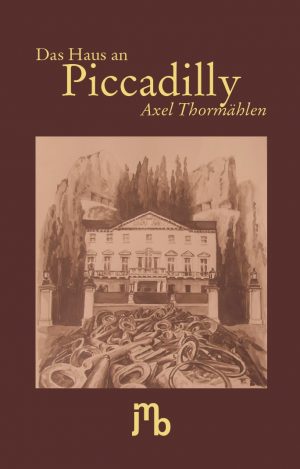
Das Haus an Piccadilly
JMB Verlag, 08 Juni 2012
Ein geheimnisvolles Haus in London erregt seit Jahren die Neugier von Leo Norman. Durch unheimliche Umstände gelangt er an das riesige Schlüsselbund dieses Hauses und stattet ihm einen unvergesslichen Besuch ab ...
Bestellung für Das Haus an Piccadilly an Jens Bolm .
"Hinter Thormählens Sprachwitz steckt ein Philosoph!"
Kunst + Kultur No. I/09

Der letzte Wikinger
JMB Verlag Hannover
ISBN 9783944342542
Illustrationen von Peter Kirchhof
Endlich gibt es eine Auswahl der besten Erzählungen von Axel Thormählen auf Deutsch:
Über die in den U.S.A. herausgegebene Auswahl A Happy Man and other Stories (Les Figues Press) schrieb Claude Rawson, Literaturprofessor an der Yale University: „Ein entzückendes, ungewöhnliches, hochindividuelles Buch mit einer milden Weisheit, manchmal beunruhigend oder belustigend oder beides zugleich, aber immer unverwechselbar.“

T.S. Eliot at the Turn of the Century
In 1993, a group of Eliot scholars came together in Lund to address the question of T. S. Eliot´s standing a hundred years after his death and on the threshold of a new millennium. The 1990s were years of Eliot-bashing; much was made of his alleged misogyny, racism, and anti-semitism, and even at the beginning of decade it was obvious that the poet´s status had suffered. Bernard Bergonzi, Lois A. Cuddy, Barbara Everett, Rudolf Germer, Nancy D. Hargrove, M. Teresa Gibert-Maceda, Stephen Medcalf, A. David Moody, Kristian Smidt, and Marianne Thormählen analysed different aspects of Eliot´s work and found enough strength and power in it to be cautiously optimistic about his future. Emrys Jones read a paper on a Stratford production of Murder in the Cathedral which focused attention on Eliot´s writing for the stage, and Grover Smith, who could not attend the meeting, contributed a new approach to The Cocktail Party. All these essays were published in the volume called T. S. Eliot at the Turn of the Century, including A. David Moody on Eliot and the mind of Europe, Nancy D. Hargrove on Eliot´s annus mirabilis in Paris (1910-1911), Bernard Bergonzi on Eliot and the city, Lois A. Cuddy on evolution in Eliot´s work, Rudolf Germer on Eliot and religion, M. Teresa Gibert-Maceda on women and Eliot, Marianne Thormählen on the problem of the individual personality in Eliot´s poetry and plays, Stephen Medcalf on the Sweeney poems, Kristian Smidt on Eliot´s less than fair treatment of the Victorians in his criticism, and Barbara Everett on the unpleasantness of meeting Mr Eliot. The volume also contains an edited version of a panel discussion about Eliot´s standing and Eliot studies. (Lund Studies in English 86, 1984; 244 pp, ed. Marianne Thormählen.)

The Brontës in Context (hardback)
Edited by: Marianne Thormählen, Lunds Universitet, Sweden
Very few families produce one outstanding writer. The Brontë family produced three. The works of Charlotte, Emily and Anne remain immensely popular, and are increasingly being studied in relation to the surroundings and wider context that formed them. The forty-two new essays in this book tell 'the Brontë story' as it has never been told before, drawing on the latest research and the best available scholarship while offering new perspectives on the writings of the sisters. A section on Brontë criticism traces their reception to the present day. The works of the sisters are explored in the context of social, political and cultural developments in early-nineteenth-century Britain, with attention given to religion, education, art, print culture, agriculture, law and medicine. Crammed with information, The Brontës in Context shows how the Brontës' fiction interacts with the spirit of the time, suggesting reasons for its enduring fascination.
The Brontës in Context, hardback
The Brontës in Context, paperback
Reviews so far
'General readers will enjoy it as much as Brontë students and fans, and its careful avoidance of anything too topical or controversial will keep it fresh for years. Thormählen's high-quality contributors, assembly of reliable facts and data, pertinent commentary, maps, illustrations, splendid chronology and further reading lists make it everything that one could wish for.' Times Literary Supplement
'The high quality of scholarship in combination with the clarity of the jargon-free writing make it a book accessible to all. Those new to the Brontës will receive a solid introduction; those familiar with the Brontë story will be surprised by new information and fresh insights. Much of the knowledge one gains over the years from reading many disparate books is gathered together into this one volume, helping the reader to develop a coherent and comprehensive understanding of this literary family's life and historical contexts. I would recommend The Brontës in Context not only to those interested in the Brontës, but to anyone studying literature in the Victorian age. /---/ [It] will serve current and future generations of Brontë readers, students and scholars admirably; it will also prompt new avenues of study as readers delve deeper into the variety of issues that this volume covers. The Brontës in Context exemplifies the best writing, communicating not only information but also pleasure to the reader who enters its pages, ensuring that it will have a lasting contribution to make to the world of Brontë studies.' Brontë Studies
'Readers of The Brontës in Context will gain fresh insights into the writings of the sisters, and also how those writings relate to the concerns of their time and contribute to our understanding of the nineteenth-century mindset. Already my copy is getting thumb-marked, and I'm sure the book will be a valued handbook for years to come.' Emerald Insight

Verksamhetsberättelser
Ytterligare 13 konturskarpa berättelser. De nya berättelserna visar på en breddning av Thormählens litterära register. Förutom inslaget av svidande samhällssatir, som känns igen från de tidigare böckerna, ingår tre sinsemellan mycket olika kärlekshistorier i denna samling. Vidare finns reflexioner kring skeendena inom och utom den tysk-svenska verklighetens råmärken och en avslutande, klassisk julberättelse som suddar ut gränser av mer än ett slag.
"Berättelserna präglas av Thormählens finurliga infallsvinklar och ironiska distans och försätter läsaren omväxlande i en road och eftertänksamt allvarlig stämning."
Monika Ivarsson, Skånska Dagbladet
"Inte minst den skenbart paradoxala föreningen av satir och solidaritet, av lekfull distans och djup humanitet, gör läsningen till ett oavbrutet nöje."
Magnus Eriksson, Svenska Dagbladet
"Hans verksamhetsberättelser vill värna det skapande momentet i människors liv."
Göran Lundstedt, Sydsvenska Dagbladet
Beställ via förlagets hemsida, www.ellerstroms.se


Reviews
There are no reviews yet.