


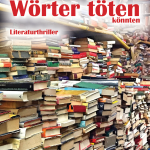
Wenn Wörter töten könnten
Axel Thormählens Literatur-Thriller Wenn Wörter töten könnten ist ein mit einer gehörigen Portion Satire angereicherter, spannender Roman, dessen Handlungen sich hinter den Kulissen des Literatur-Betriebs abspielen. Die verschiedenen Intrigen dehnen sich von Hamburg bis ins schwedische Universitätsstädtchen Lund, um auf der Insel Gotland ihre Auflösung zu finden.
Erschien Anfang Mai 2020 in einer Neuauflage bei JMB Verlag.
Related products

Eine Wintertaufe
und andere weihnachtliche Erzählungen
JMB Verlag, 2010
Das Phänomen „Weihnacht“ hat schon viele Schriftsteller/innen fasziniert. Einige Weihnachtsgeschichten, z. B. Charles Dickens’ A Christmas Carol, sind mittlerweile Klassiker der Weltliteratur. Das Thema erschöpft sich nicht; immer wieder gibt es neue Aspekte von diesem Fest der Hoffnung, das mitten im Winter den Alltag vorübergehend vertreibt. Dazu gehören die bis zum Heiligabend aufgesparten Erwartungen, die manchmal erfüllt werden und manchmal nicht. Axel Thormählen wollte eigentlich nur die eine echte Weihnachtsgeschichte schreiben und dabei das Geheimnis lüften, was Menschen mit diesem Fest verbindet. Es hat sich aber erwiesen, dass das mit einer einzigen Geschichte nicht möglich ist. Allerdings unterscheiden sich die hier vorliegenden fünf Erzählungen wohl in ihrem Ausgangspunkt, doch nicht in der Aussage, nämlich dass Wunder passieren, auch wenn sie als solche nicht wahrgenommen werden. Zuweilen geschehen sie eben gerade zur Weihnachtszeit.
Bestellung für Eine Wintertaufe und andere weihnachtliche Erzählungen an Jens Bolm .

The Water Tower and Other Stories
In these six stories, everyday incidents and situations become extraordinary, lingering on in the reader's memory. For instance, the search for the perfect Christmas tree will never be quite the same again after reading '23 December'.
The pursuit of human happiness in all its different manifestations is at the core of these taut, ironic, and compassionate tales.

A Happy Man or Der Glückliche
Les Figues Press, Los Angeles 2008
http://www.lesfigues.com
Selected short stories by Axel Thormählen, bilingual edition (English/German)
The tales in this collection could hardly be more diverse where content is concerned, ranging from the Christmas story 23 December to the young love of Dyke Crest Lane No. 1. We also meet the Construction Worker who keeps interrupting our lives with his relentless noise, the ancient church servant Thomas who inhabits the cathedrals where we catch our breath, and the old woman for whom the only uplifting thing is the Water Tower which rises near her house. In the familiar Course of Things, illness, healing process, and death go hand in hand; the Happy Man knows that, too, whereas the Churchgoer is still searching for a monumental meaning in life. We’d better make use of our Visiting Hour even if things keep breaking into little pieces, again and again.
https://www.spdbooks.org/Products/9781934254042/a-happy-man-and-other-stories.aspx
Book Reviews Blog
http://www.dalkeyarchive.com/catalog/show_comment/1594
http://skylightbooks.blogspot.com/2008/07/my-encounter-with-happy-man.html
http://www.bookslut.com/fiction/2008_11_013686.php
http://www.theshortreview.com/reviews/AxelThormahlenAHappyMan.htm
Interview with Axel Thormählen
http://www.theshortreview.com/authors/AxelThormahlen.htm

Kremberg, en julberättelse
Träsnidarmästaren Jacob Kremberg kom förmodligen från Nordtyskland. Många danska och sydsvenska kyrkor smyckas av hans verk, tillkomna i början av 1600-talet. Han är centralgestalten i denna novell, som skildrar händelser en kall decembernatt i en skånsk lantkyrka. 'Kremberg: En julberättelse' är dock ingen dokumentär redogörelse utan en historia om fantasi och skapande tillkommen på fantasins egna villkor.
Den lilla publikationen, som väger 27 gram och kostar 40 SEK, är det idealiska 'julkortet' till litterärt intresserade vänner och affärsbekanta.

The Brontës and Education (hardback)
All the seven Brontë novels are concerned with education in both senses, that of upbringing as well as that of learning. The Brontë sisters all worked as teachers before they became published novelists. In spite of the prevalence of education in the sisters' lives and fiction, however, this is the first full-length book on the subject. Marianne Thormählen explores how their representations of fictional teachers and schools engage with the intense debates on education in the nineteenth century, drawing on a wealth of documentary evidence about educational theory and practice in the lifetime of the Brontës. This study offers much new information both about the Brontës and their books and about the most urgent issue in early-nineteenth-century British social politics: the education of the people, of all classes and both sexes.
The Brontës and Education, hardback
The Brontës and Education, paperback
Reviews so far
'Compelling and unique ... This thoroughly researched volume looks at ... contemporaneous education controversies. Summing up: highly recommended.' Choice
'... writes with considerable panache and vigor. In this reviewer's experience the book makes a very enjoyable read not only for a scholar public but for a general audience as well'. www.bronteblog.blogspot.com.
Read the whole review at http://bronteblog.blogspot.com/2007/07/bronts-and-education-review.html
'... crisp, objective and lively ... Thormählen triumphs in the light she shines on the educational world in which the family lived ... This book is an exciting helpmate in the struggle to secure a firm understanding of factors that fed the Brontë sisters' imaginative development ...' Brontë Studies
''Thormählen's prose is lucid yet sophisticated, each paragraph redolent with pithy thoughts and new twists on familiar truths ... Thormählen guides us sure-footedly ... [the notes constitute] a veritable textbook on early nineteenth-century education ... [The Brontës and Education is] a deeply satisfying work that enriches our appreciation of the Brontës and their world." Modern Philology

The Brontës in Context (hardback)
Edited by: Marianne Thormählen, Lunds Universitet, Sweden
Very few families produce one outstanding writer. The Brontë family produced three. The works of Charlotte, Emily and Anne remain immensely popular, and are increasingly being studied in relation to the surroundings and wider context that formed them. The forty-two new essays in this book tell 'the Brontë story' as it has never been told before, drawing on the latest research and the best available scholarship while offering new perspectives on the writings of the sisters. A section on Brontë criticism traces their reception to the present day. The works of the sisters are explored in the context of social, political and cultural developments in early-nineteenth-century Britain, with attention given to religion, education, art, print culture, agriculture, law and medicine. Crammed with information, The Brontës in Context shows how the Brontës' fiction interacts with the spirit of the time, suggesting reasons for its enduring fascination.
The Brontës in Context, hardback
The Brontës in Context, paperback
Reviews so far
'General readers will enjoy it as much as Brontë students and fans, and its careful avoidance of anything too topical or controversial will keep it fresh for years. Thormählen's high-quality contributors, assembly of reliable facts and data, pertinent commentary, maps, illustrations, splendid chronology and further reading lists make it everything that one could wish for.' Times Literary Supplement
'The high quality of scholarship in combination with the clarity of the jargon-free writing make it a book accessible to all. Those new to the Brontës will receive a solid introduction; those familiar with the Brontë story will be surprised by new information and fresh insights. Much of the knowledge one gains over the years from reading many disparate books is gathered together into this one volume, helping the reader to develop a coherent and comprehensive understanding of this literary family's life and historical contexts. I would recommend The Brontës in Context not only to those interested in the Brontës, but to anyone studying literature in the Victorian age. /---/ [It] will serve current and future generations of Brontë readers, students and scholars admirably; it will also prompt new avenues of study as readers delve deeper into the variety of issues that this volume covers. The Brontës in Context exemplifies the best writing, communicating not only information but also pleasure to the reader who enters its pages, ensuring that it will have a lasting contribution to make to the world of Brontë studies.' Brontë Studies
'Readers of The Brontës in Context will gain fresh insights into the writings of the sisters, and also how those writings relate to the concerns of their time and contribute to our understanding of the nineteenth-century mindset. Already my copy is getting thumb-marked, and I'm sure the book will be a valued handbook for years to come.' Emerald Insight


Reviews
There are no reviews yet.