


Hanky
Roman von Axel Thormählen
(Merlin Verlag)
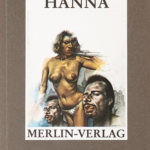
Hanky ist der erste Roman des Autors und erschien 1978 beim Merlin Verlag. Wie auch im darauffolgenden Roman Hanna ist der Handlungsort das Weserstädtchen Brake, doch abspielen könnten sich die Handlungen auch in jeder anderen Kleinstadt. Während der Alkoholiker Hanky von den Kleinbürgern wegen seiner Homosexualität geschnitten und als Aussätziger behandelt wird, ist es bei Hanna die „Sünde der Frau“, die Anstoß erregt.
Hier zwei Ausschnitte aus dem Roman „Hanky“, den die FAZ mit den Worten „mehr als eine Talentprobe, sondern ein Kunstwerk hohen Grades“ lobte.
Related products


Rochester – The Poems in Context (hardback)
The 1999 Oxford University Press edition by Harold Love of the works of John Wilmot, 2nd Earl of Rochester, praises Marianne Thormählen's Rochester: The Poems in Context (Cambridge University Press, 1993; a paperback edition appeared in 2006) as the most up-to-date book on Rochester's poetry, a "fresh, personal, and profoundly learned" study (pp. xlvi-xlvii). Other scholars have called it "splendid" (The Yearbook of English Studies), "intelligent and careful" (The Review of English Studies), "judicious" (Times Literary Supplement), and "smart and useful ... a treasure trove of information [for which] readers of Rochester will be indebted to Ms Thormählen for years to come" (The Scriblerian).
Marianne Thormählen regards Rochester as a serious poet who devoted much time and care to his verse and aimed for the highest standards in his writing. This view runs counter to the traditional idea of Rochester as the "wicked earl" who wrote with ease; but she bolsters it with convincing evidence of painstaking literary desk-work, deliberate exploitation and subversion of poetical conventions, and subtly crafted references to people and events in Charles II's and Louis XIV's Europe. Rochester's much-talked-about obscenities are shown to belong within a sombre framework of dissatisfaction with sensual pursuits and distrust of male sexual ability. The book ends with a consideration of Rochester's famous deathbed conversion. A select bibliography directs the reader to every notable work on Rochester up to 1990.
Rochester: The Poems in Context, hardback
Rochester: The Poems in Context, paperback

Eliot’s Animals
T. S. Eliot´s poems and plays are full of animals, from the alley cats of the early poems by way of the eagle, leopards, and unicorns in Ash-Wednesday to the birds in Four Quartets. Marianne Thormählen´s Eliot´s Animals takes you on a guided tour of Eliot´s bestiary, showing how the poet brought a rich variety of ideas about animals into his texts and invested those texts with layers of meaning derived from, for instance, Dante, Baudelaire, and the Bible. Eliot´s Animals is a book to dip into for the Eliot reader curious to see how a particular scene can be perceived with reference to the function of a particular animal image. There is no need to read it straight through -- but those who do will learn something new about Eliot´s range and subtlety in handling symbolic features. (Lund Studies in English No. 70, 1984; 197 pp.)

The Brontës in Context (hardback)
Edited by: Marianne Thormählen, Lunds Universitet, Sweden
Very few families produce one outstanding writer. The Brontë family produced three. The works of Charlotte, Emily and Anne remain immensely popular, and are increasingly being studied in relation to the surroundings and wider context that formed them. The forty-two new essays in this book tell 'the Brontë story' as it has never been told before, drawing on the latest research and the best available scholarship while offering new perspectives on the writings of the sisters. A section on Brontë criticism traces their reception to the present day. The works of the sisters are explored in the context of social, political and cultural developments in early-nineteenth-century Britain, with attention given to religion, education, art, print culture, agriculture, law and medicine. Crammed with information, The Brontës in Context shows how the Brontës' fiction interacts with the spirit of the time, suggesting reasons for its enduring fascination.
The Brontës in Context, hardback
The Brontës in Context, paperback
Reviews so far
'General readers will enjoy it as much as Brontë students and fans, and its careful avoidance of anything too topical or controversial will keep it fresh for years. Thormählen's high-quality contributors, assembly of reliable facts and data, pertinent commentary, maps, illustrations, splendid chronology and further reading lists make it everything that one could wish for.' Times Literary Supplement
'The high quality of scholarship in combination with the clarity of the jargon-free writing make it a book accessible to all. Those new to the Brontës will receive a solid introduction; those familiar with the Brontë story will be surprised by new information and fresh insights. Much of the knowledge one gains over the years from reading many disparate books is gathered together into this one volume, helping the reader to develop a coherent and comprehensive understanding of this literary family's life and historical contexts. I would recommend The Brontës in Context not only to those interested in the Brontës, but to anyone studying literature in the Victorian age. /---/ [It] will serve current and future generations of Brontë readers, students and scholars admirably; it will also prompt new avenues of study as readers delve deeper into the variety of issues that this volume covers. The Brontës in Context exemplifies the best writing, communicating not only information but also pleasure to the reader who enters its pages, ensuring that it will have a lasting contribution to make to the world of Brontë studies.' Brontë Studies
'Readers of The Brontës in Context will gain fresh insights into the writings of the sisters, and also how those writings relate to the concerns of their time and contribute to our understanding of the nineteenth-century mindset. Already my copy is getting thumb-marked, and I'm sure the book will be a valued handbook for years to come.' Emerald Insight

Verksamhetsberättelser
Ytterligare 13 konturskarpa berättelser. De nya berättelserna visar på en breddning av Thormählens litterära register. Förutom inslaget av svidande samhällssatir, som känns igen från de tidigare böckerna, ingår tre sinsemellan mycket olika kärlekshistorier i denna samling. Vidare finns reflexioner kring skeendena inom och utom den tysk-svenska verklighetens råmärken och en avslutande, klassisk julberättelse som suddar ut gränser av mer än ett slag.
"Berättelserna präglas av Thormählens finurliga infallsvinklar och ironiska distans och försätter läsaren omväxlande i en road och eftertänksamt allvarlig stämning."
Monika Ivarsson, Skånska Dagbladet
"Inte minst den skenbart paradoxala föreningen av satir och solidaritet, av lekfull distans och djup humanitet, gör läsningen till ett oavbrutet nöje."
Magnus Eriksson, Svenska Dagbladet
"Hans verksamhetsberättelser vill värna det skapande momentet i människors liv."
Göran Lundstedt, Sydsvenska Dagbladet
Beställ via förlagets hemsida, www.ellerstroms.se

Wilhelm
Banktjänstemannen Frieder K. är en vanlig familjefar som ställs inför ett ovanligt problem. Vissa tecken tyder på, att hans just avlidne far Wilhelm inte utan vidare låter sig bringas ur världen. Wilhelm dyker upp på det mest oväntade platser, och vissa handlingar finns inte där de borde vara. Frieder offrar dyrbara semesterdagar för att lösa "mysteriet Wilhelm" men blir bara alltmer osäker. Hans välordnade värld hänger helt plötsligt inte ihop längre. Frieder förändras under sitt sökande efter Wilhelm. Han börjar accepteraockså det ovissa och skrämmande i tillvaron, och gränsen mellan hans och faderns identiteter blir alltmer diffus för honom. Ur hans synvinkel blir tankegångar och handlingarsom för utomstående ter sig absurda, för att inte säga groteska, enbart logiska och nödvändiga.
Romanen om Frieder och hans far utspelar sig inom en generations nutid och förflutna, en generation vars första år sammanföll med Tredje Rikets Tyskland.
Beställ via förlagets hemsida, www.ellerstroms.se


Reviews
There are no reviews yet.