


The Brontës and Education (hardback)
670.00 kr
All the seven Brontë novels are concerned with education in both senses, that of upbringing as well as that of learning. The Brontë sisters all worked as teachers before they became published novelists. In spite of the prevalence of education in the sisters’ lives and fiction, however, this is the first full-length book on the subject. Marianne Thormählen explores how their representations of fictional teachers and schools engage with the intense debates on education in the nineteenth century, drawing on a wealth of documentary evidence about educational theory and practice in the lifetime of the Brontës. This study offers much new information both about the Brontës and their books and about the most urgent issue in early-nineteenth-century British social politics: the education of the people, of all classes and both sexes.
The Brontës and Education, hardback
The Brontës and Education, paperback
Reviews so far
‘Compelling and unique … This thoroughly researched volume looks at … contemporaneous education controversies. Summing up: highly recommended.’ Choice
‘… writes with considerable panache and vigor. In this reviewer’s experience the book makes a very enjoyable read not only for a scholar public but for a general audience as well’. www.bronteblog.blogspot.com.
Read the whole review at http://bronteblog.blogspot.com/2007/07/bronts-and-education-review.html
‘… crisp, objective and lively … Thormählen triumphs in the light she shines on the educational world in which the family lived … This book is an exciting helpmate in the struggle to secure a firm understanding of factors that fed the Brontë sisters’ imaginative development …’ Brontë Studies
”Thormählen’s prose is lucid yet sophisticated, each paragraph redolent with pithy thoughts and new twists on familiar truths … Thormählen guides us sure-footedly … [the notes constitute] a veritable textbook on early nineteenth-century education … [The Brontës and Education is] a deeply satisfying work that enriches our appreciation of the Brontës and their world.” Modern Philology
Related products

Der Grüne Himmel
JMB Verlag, 2015
Illustrationen von Peter Kirchhof
„Schlachtfeld Menschheit“: Unter diesem Thema wird in der kleinen südschwedischen Universitätsstadt Lund eine zehntägige Konferenz abgehalten, an der führende Geisteswissenschaftler aus aller Welt teilnehmen. Parallel dazu tagen im medizinischen Bereich Experten der Kardiologie. Bei einem Ausflug am ersten Tag vermischen sich einige der Teilnehmer in einem kleinen Wald außerhalb von Lund. Dieser Wald ist danach der wirkliche Mittelpunkt der Handlung. Jeden Tag treffen sich dort verschiedene Personen und machen Spaziergänge, wobei zuweilen merkwürdige Dinge passieren.
Dieser Roman besteht aus Episoden. Während der jeweiligen Spaziergänge werden zentrale Aspekte unseres Menschenlebens angesprochen. Dazu gehören Alter und Kindheit, Liebe, Krankheit und Tod sowie Kunst, Lüge und Zukunft. Axel Thormählen beschreibt die Geschehnisse in einem warmen und zeitweise humoristischen Ton. Ohne vor den tiefsten Unruhen der Menschenseele haltzumachen, bietet dieser zugleich besinnliche und fantasievolle Roman vor allem Trost.

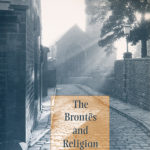
The Brontës and Religion (paperback)
appeared from Cambridge University Press in 1999. The first full-length study of religion in the Brontë fiction, it shows how the Brontës' familiarity with the contemporary debates on doctrinal, ethical, and ecclesiastical issues informs their novels. Divided into four parts, the book examines denominations, doctrines, ethics, and clerics in the work of the Brontës. The analyses of the novels clarify the constant interplay of human and divine love in their development. While demonstrating that the Brontës' fiction is usually in agreement with the basic tenets of Evangelical Anglicanism, The Brontës and Religion emphasises the characteristic spiritual freedom and audacity of the Brontës. Lucid and vigorously written, it opens up new perspectives for Brontë specialists and enthusiasts alike on a fundamental aspect of the novels greatly neglected in recent decades.
Excerpts from reviews: "[a] well-informed [study] based on scrupulous readings and meticulous judgments" (Times Literary Supplement); "[the author's] willingness to read with the grain of the novels' religion makes for absorbing reading" (Victorian Studies); "a refreshingly textual study of the Brontës' fiction" (The Review of English Studies); "a work of extraordinarily comprehensive scholarship" (The Journal of Ecclesiastical History); "the kind of writing which will endure and remain valuable for many years to come" (Theology); "I very much enjoyed this book" (Reviews in Religion & Theology).
The Brontës and Religion, hardback
The Brontës and Religion, paperback


T.S. Eliot at the Turn of the Century
In 1993, a group of Eliot scholars came together in Lund to address the question of T. S. Eliot´s standing a hundred years after his death and on the threshold of a new millennium. The 1990s were years of Eliot-bashing; much was made of his alleged misogyny, racism, and anti-semitism, and even at the beginning of decade it was obvious that the poet´s status had suffered. Bernard Bergonzi, Lois A. Cuddy, Barbara Everett, Rudolf Germer, Nancy D. Hargrove, M. Teresa Gibert-Maceda, Stephen Medcalf, A. David Moody, Kristian Smidt, and Marianne Thormählen analysed different aspects of Eliot´s work and found enough strength and power in it to be cautiously optimistic about his future. Emrys Jones read a paper on a Stratford production of Murder in the Cathedral which focused attention on Eliot´s writing for the stage, and Grover Smith, who could not attend the meeting, contributed a new approach to The Cocktail Party. All these essays were published in the volume called T. S. Eliot at the Turn of the Century, including A. David Moody on Eliot and the mind of Europe, Nancy D. Hargrove on Eliot´s annus mirabilis in Paris (1910-1911), Bernard Bergonzi on Eliot and the city, Lois A. Cuddy on evolution in Eliot´s work, Rudolf Germer on Eliot and religion, M. Teresa Gibert-Maceda on women and Eliot, Marianne Thormählen on the problem of the individual personality in Eliot´s poetry and plays, Stephen Medcalf on the Sweeney poems, Kristian Smidt on Eliot´s less than fair treatment of the Victorians in his criticism, and Barbara Everett on the unpleasantness of meeting Mr Eliot. The volume also contains an edited version of a panel discussion about Eliot´s standing and Eliot studies. (Lund Studies in English 86, 1984; 244 pp, ed. Marianne Thormählen.)

The Waste Land a Fragmentary Wholeness
T. S. Eliot is felt by many to have been the poet of the twentieth century, and his famous The Waste Land is the best known poem of that century in English. Many people have found it hard to come to grips with, though, and reading Eliot remains a challenge.
"A hoax", "tripe", a piece of "rhythmical grumbling" (the latter is the poet´s own description) -- is T. S. Eliot´s The Waste Land really worth all the attention it has come in for since its publication in 1922? Thousands of literary critics and scholars have been writing about it -- what inspired such enormous efforts? And will the new millennium gratefully drop it into semi-oblivion as a period piece belonging to the world of yesterday? You´ll know more about The Waste Land, and about Eliot, and about the way you yourself respond to modern poetry after reading Marianne Thormählen´s The Waste Land: A Fragmentary Wholeness. First published in 1978, it has become a standard work on the poem, partly thanks to its generous annotation and bibliography which have helped many students chart their own way through this challenging terrain. The book tells you about the poem´s gestation, Ezra Pound´s midwifery, metre and rhythm in the Waste Land, and the symbolic imagery that is such a powerful dimension in all of Eliot´s work. It also suggests ways of freeing the reader from the obligation to make it all hang together by working out a consistent "plan" or "structure". Let The Waste Land: A Fragmentary Wholeness help you form your own relationship with the greatest modernist poem, unhampered by preconceived notions and unworried by its alleged "difficulty". (Lund Studies in English No. 52, 1978; 248 pp.)
The Brontës and Religion (hardback)
appeared from Cambridge University Press in 1999. The first full-length study of religion in the Brontë fiction, it shows how the Brontës' familiarity with the contemporary debates on doctrinal, ethical, and ecclesiastical issues informs their novels. Divided into four parts, the book examines denominations, doctrines, ethics, and clerics in the work of the Brontës. The analyses of the novels clarify the constant interplay of human and divine love in their development. While demonstrating that the Brontës' fiction is usually in agreement with the basic tenets of Evangelical Anglicanism, The Brontës and Religion emphasises the characteristic spiritual freedom and audacity of the Brontës. Lucid and vigorously written, it opens up new perspectives for Brontë specialists and enthusiasts alike on a fundamental aspect of the novels greatly neglected in recent decades.
Excerpts from reviews: "[a] well-informed [study] based on scrupulous readings and meticulous judgments" (Times Literary Supplement); "[the author's] willingness to read with the grain of the novels' religion makes for absorbing reading" (Victorian Studies); "a refreshingly textual study of the Brontës' fiction" (The Review of English Studies); "a work of extraordinarily comprehensive scholarship" (The Journal of Ecclesiastical History); "the kind of writing which will endure and remain valuable for many years to come" (Theology); "I very much enjoyed this book" (Reviews in Religion & Theology).
The Brontës and Religion, hardback
The Brontës and Religion, paperback


Reviews
There are no reviews yet.